A Broken Launch in a Crowded Year Is a Death Sentence
Broken game launches and 2026 upcoming releases face brutal competition as players quickly abandon unfinished or mediocre titles.
I still remember the Redfall conversation. Not the game itself, exactly, but the silence that followed it. The hype, the rough launch, the mixed-to-negative reviews, the backlash, and then the first big patch arriving like a paramedic at a party that ended hours ago. In 2026, that silence is the part that sticks with me. It is the sound of a game being erased from the release calendar by its own bad first impression.
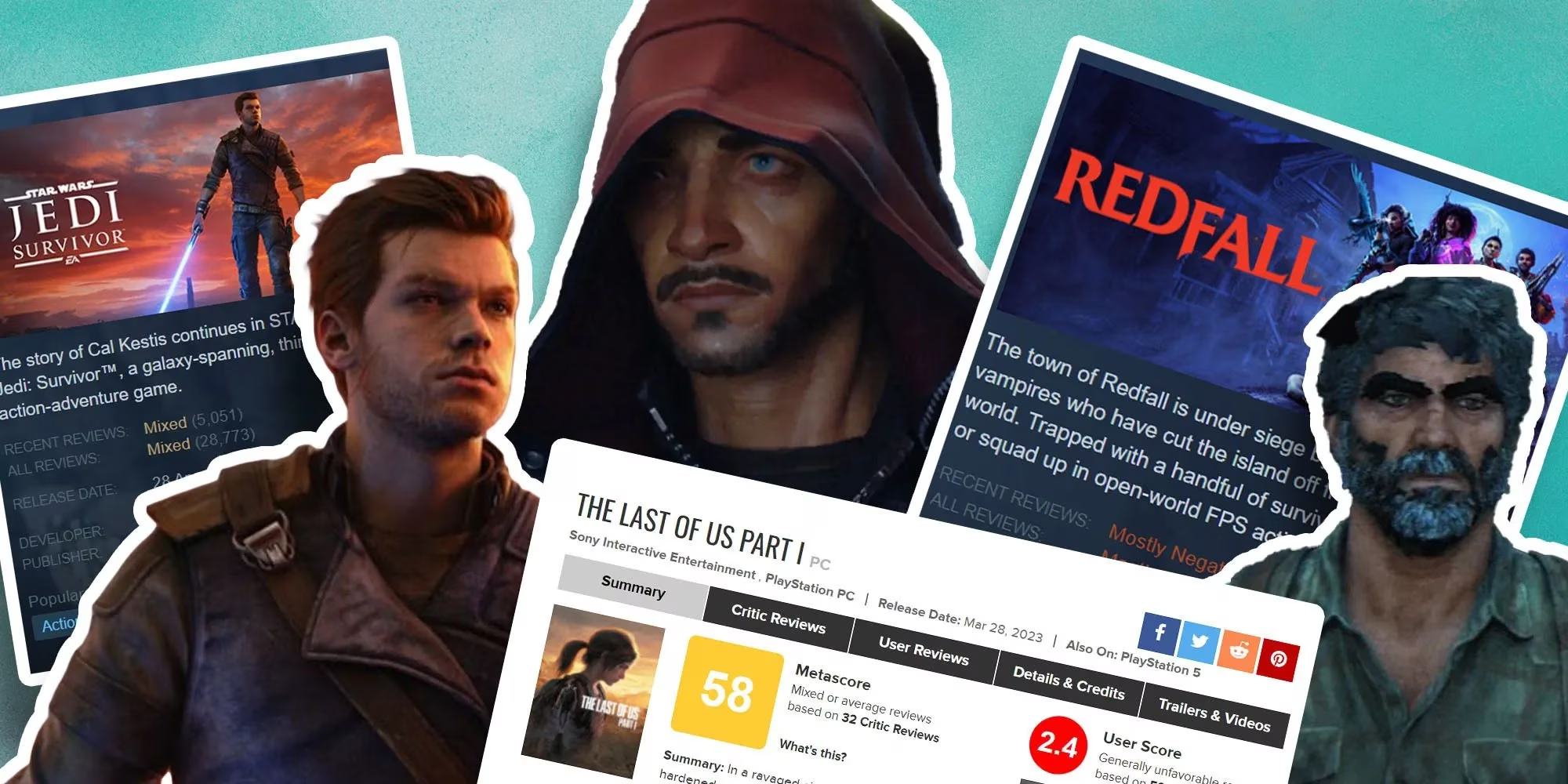
The math was brutal then, and it is brutal now. In 2023, Star Wars Jedi: Survivor launched mere days before Redfall and kept peaks in the thousands while Redfall's concurrent player count on Steam Charts peaked at 101. That was supposed to be one of Xbox's biggest launches of the year. It barely earned a mention at the Xbox Games Showcase. We did not collectively decide to forget it; the market did it for us. In 2026, with even more games fighting for the same finite hours, the same math applies with sharper teeth. There are simply too many releases, too many subscriptions, too many sales, and too many backlogs for a game to have a bad launch and still expect me to wait around. If any of 2026's upcoming releases launch the way Redfall did, they will be gone. Poof, kaput.
I have a simple rule now: if a game is broken at launch, I do not wait for the patch. I move on. If the big RPG is a mess, I play the fighting game. If the horror sequel is unplayable, I play the superhero sequel. If everything is broken, I go back to the first half of the year and catch up. I grind for hours in a loot game. I finally start Cyberpunk 2077 and its expansion, having missed it the first time around. I play the indies I have been desperate to get my hands on. My backlog is not a punishment; it is a safety net. I am not entitled, and I am not impatient for the sake of it. I am busy, and my free time is the scarcest resource I own.
There was a time when I would give a broken game weeks of my life. I would refresh patch notes, follow hotfixes, and tell myself the studio would turn it around. I do not do that anymore. Not because I am cruel, but because the market has trained me. Every hour I spend waiting is an hour I could spend in a game that respects my time. Redfall was not just a bad game; it was a missed moment. The first patch may have been substantial, but the conversation had already moved on. That is the real cost of a broken launch in a crowded year: not the review score, but the disappearance.
| If this launches broken... | I am playing instead... |
|---|---|
| 🐉 A huge RPG with crashes | 🥊 A fighting game with clean netcode |
| 👻 A horror sequel with bad performance | 🕷️ A superhero blockbuster |
| 🚀 A live-service shooter with missing features | 📚 An indie I have been saving for months |
| 💀 Everything at once | 🗂️ My backlog from the first half of the year |
Launching a mediocre game can be just as fatal. In a packed cycle, fine is not enough. A highly anticipated release can overshadow a decent one in a single news cycle. Word-of-mouth is immediate, and the launch window closes fast. A last-minute delay makes more sense than shipping broken. Fans will be angry, yes. But delay anger fades when the game finally works. Broken-launch anger does not fade; it becomes the game's identity. In 2026, players have more choices, more subscriptions, more sales, and more reasons to close a game and never reopen it. The first impression is the only impression, and the patch notes are not a time machine.
The patch arrives to an empty room. That is the lose-lose. Developers lose trust. Publishers lose momentum. Players lose money and time. And the people who might have become champions of the game have already moved on. You cannot patch away a missed moment. You can fix bugs, but you cannot fix the fact that nobody is there to see the fix. That is why I hope 2026 is the year the industry stops treating launch as a beta test. Delay. Polish. Communicate. Ship it when it is ready. The calendar is too crowded for anything else. I am hoping it does not happen again, but I am not holding my breath.
According to coverage from Polygon, the modern release calendar leaves little margin for recovery when a major game stumbles out of the gate, because player attention quickly shifts to the next polished alternative rather than waiting through weeks of fixes. That perspective reinforces the idea that in a crowded year, launch quality is not just a technical concern but a defining part of a game's reputation, shaping whether it becomes part of the conversation or disappears from it almost immediately.
Comments