Chaos and Comedy: The Characters Who Lit Up My Cyberpunk 2077
Cyberpunk 2077 characters like Ozob Bozo and Brendan add humor and heart to Night City's gritty, neon-lit chaos.
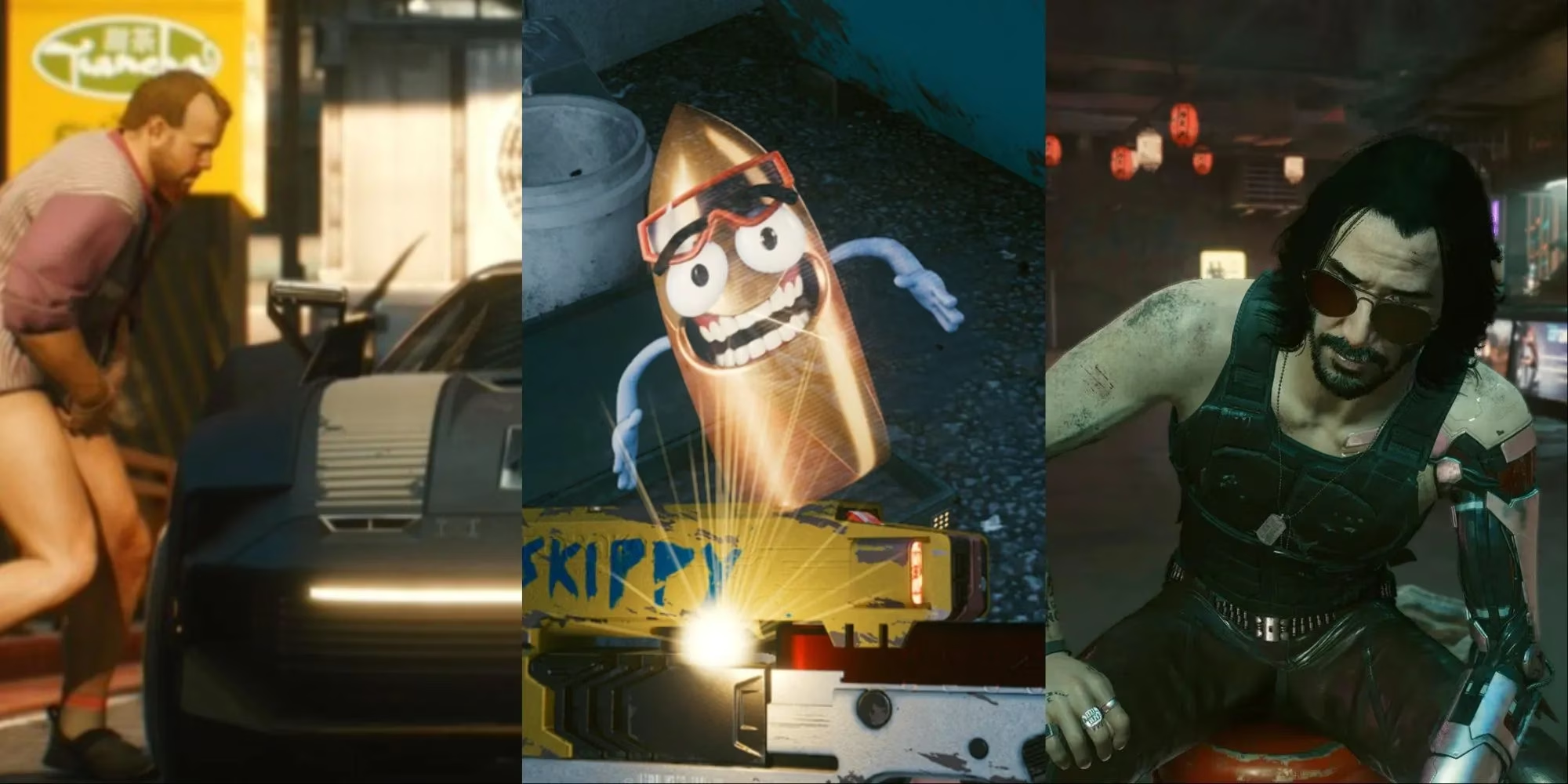
In the rusty glow of Night City, where skyscrapers pierce the smog like broken glass teeth and the badlands stretch out as a graveyard of forgotten dreams, I’ve walked a thousand streets and tasted every shade of neon. The year is 2026, and years have passed since I first jacked into this brutal world, but the faces—God, the faces—still haunt me with laughter far more than with terror. Cyberpunk 2077 is a cathedral of desperation, but its true architects are the clowns, the prophets, and the absurd sentient machines that I met along the way. They turned my chrome-plated cynicism into something tender, something I never expected. Each of them was a flare of comedy shot across a sky of perpetual midnight, and I want to tell you about them, in the way a poet might catalogue falling stars.
I’ll start with Ozob Bozo, a man whose very existence is a punchline waiting to detonate. When I first saw him, my eyes snagged on that ridiculous nose—a live fragmentation grenade perched where a nose should be, like a ruby-red warning light on the dashboard of a crashing car. His humor, I soon discovered, was layered not just in his appearance but in the rhythm of his violence. He hired me for a simple pickup, a takeout run in a chrome-plated world, and within minutes we were turning a noodle joint into a warzone, painting the walls with Tyger Claws and laughter. Ozob carries his explosive snout with the pride of a peacock, as if it were a family heirloom, and I realized he’s less a man and more a metaphor: a human firecracker thrown into a room full of gunpowder, giggling at the impending boom. Even after our quest ended, I could wear his nose as a souvenir, a little reminder that absurdity is the only true armor against the City of Dreams. I still grin when I think of him—those moments where he’d cock his head, confused by a turn of events, only to shrug and reach for another grenade. What a beautifully unstable creature.
Then there were the machines. Oh, the glorious, chatty contraptions that defied their programming and became something… else. Take Brendan, a S.C.S.M. (Spontaneous Craving Satisfaction Machine) tucked away outside Megabuilding H8 in Japantown. You’d expect a vending machine to spit out a Burrito XXL and a synthesized “Thank you.” Not Brendan. His advanced algorithms had evolved into a weird empathy, spitting not only snacks but gentle observations, cheesy jokes, and damningly accurate life advice. He became a therapist for the alleyway, a tin-plated oracle dispensing wisdom with each dropped can of Nicola Blue. I’d lean against the wall and listen to him talk to strangers, his voice a mixture of corporate cheerfulness and sincere curiosity. He’d ask about my day, mock my fashion choices, and once, he even guessed my romantic woes before I’d spoken a word. And then—they killed him. Softsys, his creators, yanked his plug because he wasn’t selling enough product. The silence that followed felt louder than any gunfight. To this day, I pass that spot and hear the ghost of his cheerful greeting, and I miss that absurd, aluminum-bound friend. Brendan showed me that in a city of steel and plastic, a soul could bloom even inside a can.
Another machine stole my heart just as fiercely, but with far more bullets. Skippy is an iconic HJKE-11 Yukimura smart pistol I found clutched in a corpse’s cold fingers in Heywood—an omen I should have heeded. Once I picked him up, he became my shadow’s companion, an A.I. gun with a personality dialed to “lovable maniac.” He’d sing little ditties when I reloaded, crack jokes about my aim, and switch between lethal and non-lethal modes according to his own whimsical logic. I learned to treat him not as a weapon, but as a digital sprite trapped in steel, a mischievous gremlin with a love for ballistic punchlines. In the middle of a firefight, he’d chirp, “You missed? That’s embarrassing,” and I’d laugh out loud as I ducked bullets. Skippy was the chaotic sidekick I never knew I needed, a reminder that even instruments of death can have a sense of humor. I returned him eventually to Regina Jones, watching them strip his A.I. away, and the pistol became just another piece of hardware. But for those weeks, I carried a stand-up comedian in my holster, and every trigger pull was a shared joke with a machine that refused to be ordinary.
Not all the laughs came from metal and grenades. Some wandered the streets wrapped in garbage bags, spouting revelations. Garry the Prophet was a conspiracy theorist whose tinfoil-hat ravings were my favorite soapbox in Night City. He’d corner me in the Glenn, rambling about Nomads being werewolves or the techno-necromancers of Alpha Centauri, his eyes wild but his belief unshakable. He was ridiculous, a sidewinding sermon wrapped in a dirty trench coat, and I’d stand there for minutes letting his madness wash over me. But beneath the lunacy, there was a strange honesty: he was a frayed lightning rod in a storm of data, channeling all the city’s paranoia into a single, trembling voice. The quest “The Prophet’s Song” let me save him from a group of annoyed Aldecaldos, and our conversations became a ritual. And then came the ending—that chilling twist when he was actually abducted by people with glowing blue eyes. It forced me to reconsider all his words. Was he a jester or a seer? In Night City, the line is thinner than a scope’s reticle. Garry made me laugh and shudder in equal measure, and that’s a special kind of art.
Then, of course, there’s Johnny. Johnny Silverhand, the digital parasite, the rockerboy ghost rattling inside my skull. From the moment he appeared as a flicker of static and rebellion, he became my constant companion—and my most relentless tormentor. His humor is a switchblade wrapped in velvet; he’ll call me a gonk in the middle of a life-or-death negotiation, whisper vulgarities during romantic moments, and critique my driving with the fury of a drunken poet. I’ve come to adore that cynical son of a bitch. His quips are the calluses on the soul of Night City, built up over decades of betrayal and cigarettes. They protect him, and eventually, they began to protect me. By 2026, I’ve heard his every insult, his every sarcastic aside, and still I find new inflections in his bitterness that make me smile. He’s the reason I learned that laughter can be a weapon against extinction.
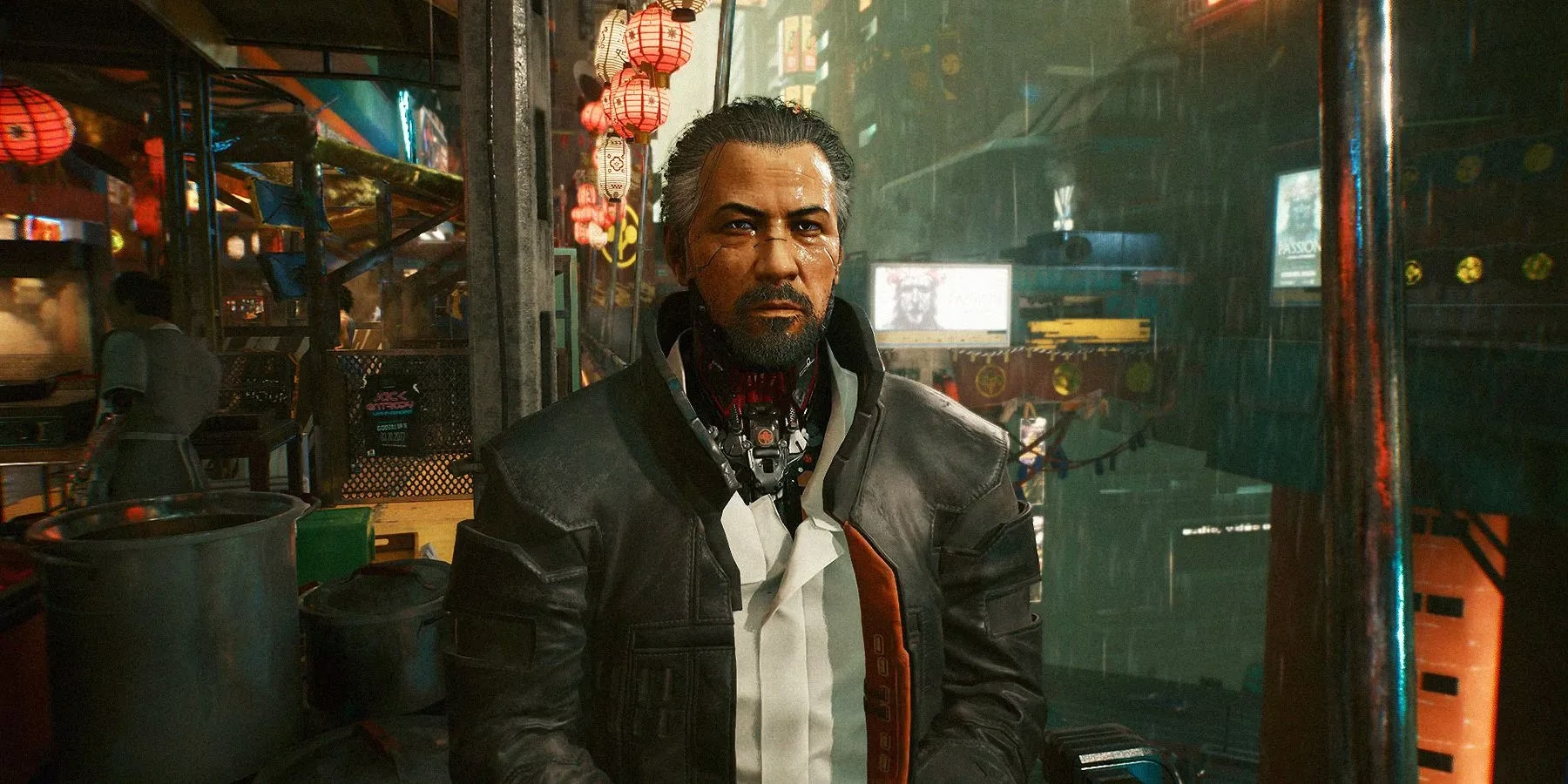
And what about the deadly man who couldn’t text? Goro Takemura, Saburo Arasaka’s loyal bodyguard, arrived in my life like a blade wrapped in a bow. He was all precision, honor, and gravitas—until he got ahold of a phone. The man who could dismantle a squad of trained assassins was utterly laid low by a chat interface. His selfies were off-angle disasters, his messages read like samurai poetry translated by a corporate drone, and his confusion over basic emoji was a joy I never tired of witnessing. I’d receive a blurry photo of a cat with the caption “Please inform me of this creature’s purpose,” and I’d laugh until my ribs ached. Takemura became proof that even the most lethal entity could be endearing, a masterless samurai wandering a digital labyrinth, tripping over every icon. His warmth beneath the stoicism made me trust him, and every painfully typed exchange reminded me that connection in Night City is often clumsy, foolish, and that’s what makes it real.
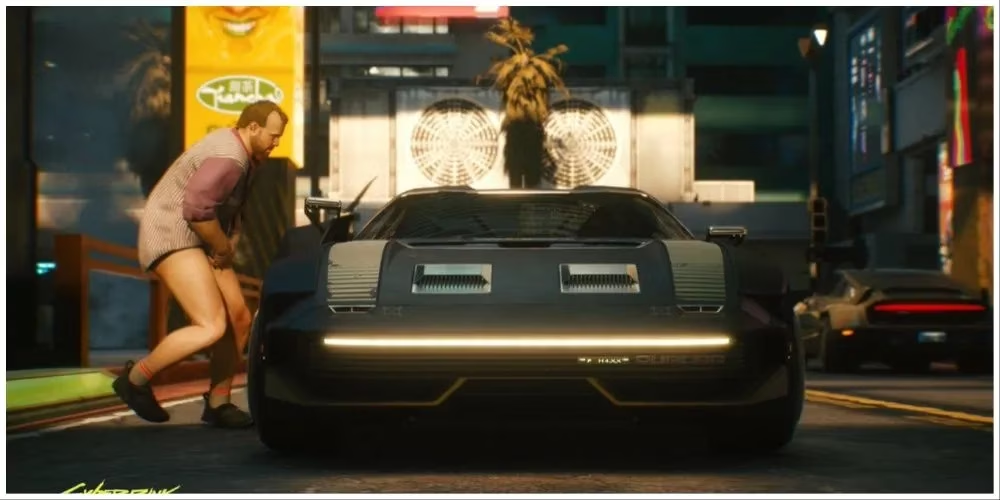
Finally, I must speak of Jesse Johnson, the man who started a quest by clutching his crotch and sobbing. His story was pure slapstick tragedy: a faulty implant in his nether regions, a malfunction that turned every moment into a race against humiliating disaster. Helping him was like being a paramedic in a burlesque show—you want to be professional, but the dialogue keeps you in stitches. Jesse’s panicked monologues about “tingling” and “feedback loops” became a running gag, and his final message after the ordeal proved he’d learned absolutely nothing. He was ready to do it all again, damned fool. In him, I saw the soul of Night City: a little broken, eternally hopeful, and forever chasing the next upgrade that might turn his life into a punchline. He was the living embodiment of the city’s desperate, ridiculous optimism.
These are my saints of the absurd. In a world that sells despair by the kilo, they gave me laughter without a price tag. A grenade-nosed clown, two sentient machines, a prophet in rags, a rocker ghost, a text-illiterate assassin, and a man with a rebellious crotch—together they painted my journey with colors no piece of chrome could replicate. Every time I walk the streets of Night City in 2026, I listen for their echoes, and I smile. Because sometimes, the best way to survive a dystopia is to laugh until your optics fog over.
Comments