Cyberpunk 2077 Phantom Liberty’s Revenue Success & What’s Next for CD Projekt Red in 2026
Phantom Liberty's 3M launch sales drove Cyberpunk 2077's comeback for CD Projekt Red, proving the value of sustained support.
When Cyberpunk 2077 first launched in December 2020, its disastrous technical state on last-gen consoles and a mountain of bugs led many to write it off as one of gaming’s biggest disappointments. Fast forward to 2026, and CD Projekt Red has not only salvaged its reputation but turned the sci-fi RPG into a long-running commercial juggernaut – and the Phantom Liberty expansion stands as the definitive proof of this turnaround. Back in September 2023, the spy-thriller DLC hit digital storefronts and sold over 3 million copies in its first week, a staggering figure that re-energized the Polish studio and set the stage for everything that followed. But how exactly did a single expansion manage to rewrite the narrative for a game that was once synonymous with broken promises? And with several projects now in the pipeline, can CD Projekt Red sustain this redemption arc deep into the current console generation?
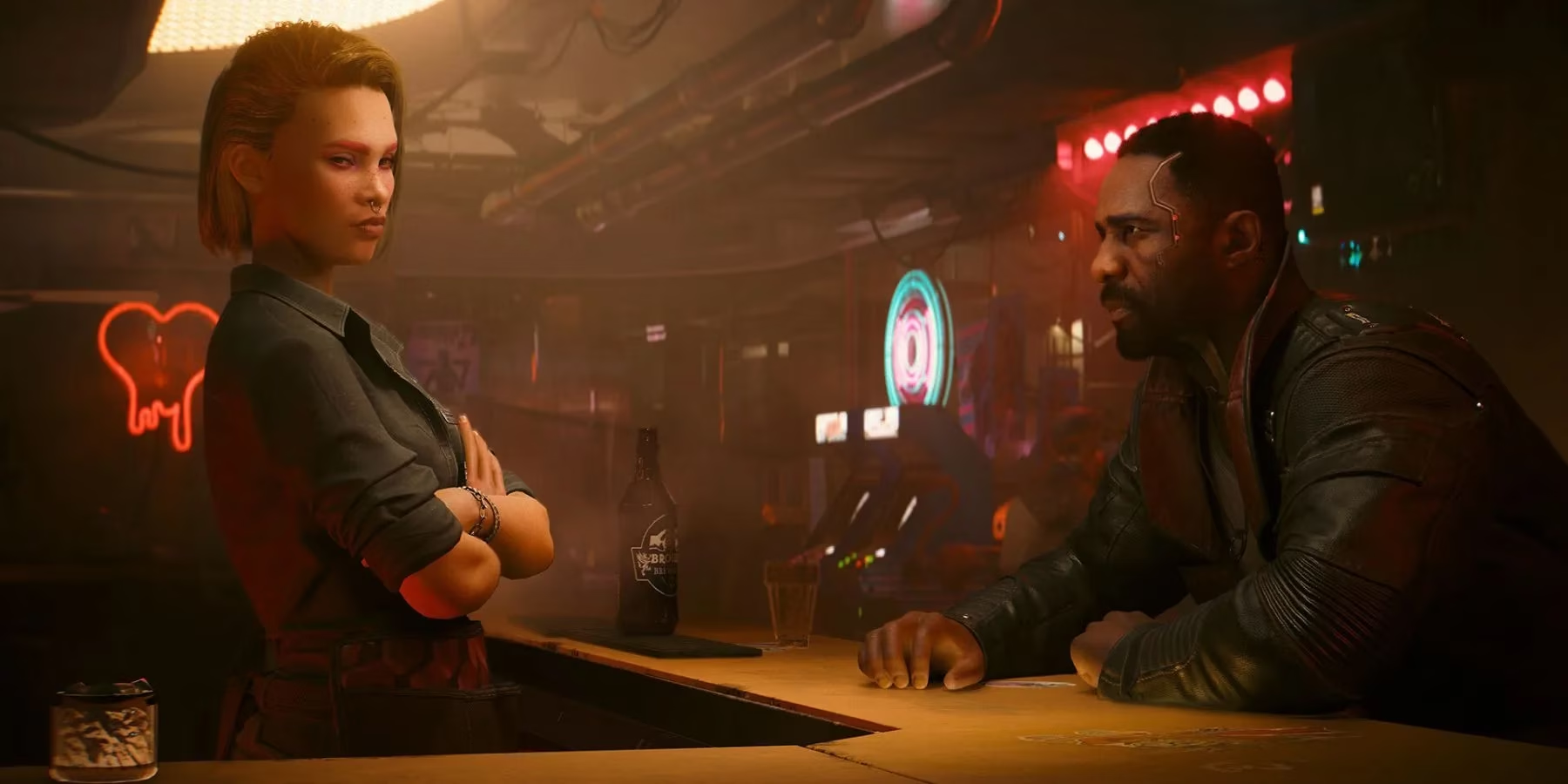
The numbers behind Phantom Liberty’s launch were nothing short of remarkable. Of the 3 million units shifted in those first seven days, PC players accounted for roughly 68% of the total – around 2.04 million copies. PlayStation 5 owners grabbed 0.6 million, while 0.39 million were sold on Xbox Series X|S. To put this in perspective, CD Projekt Red disclosed during its Q3 2023 earnings call that the expansion’s production cost ran to 275 million PLN (approximately $62.8 million at the time), with an additional 95 million PLN ($21.7 million) spent on marketing. Breaking even within a single week on a budget of nearly $85 million is the kind of return most AAA studios can only dream of. By the end of 2023, the base game had surpassed 25 million lifetime sales, and the entire CDPR catalogue – including The Witcher trilogy – crossed the 100 million mark. Analysts at the time pointed to the studio’s relentless post-launch support, the warmly received Cyberpunk 2077 next-gen update, and the tie-in anime Edgerunners as the driving forces behind this commercial comeback.
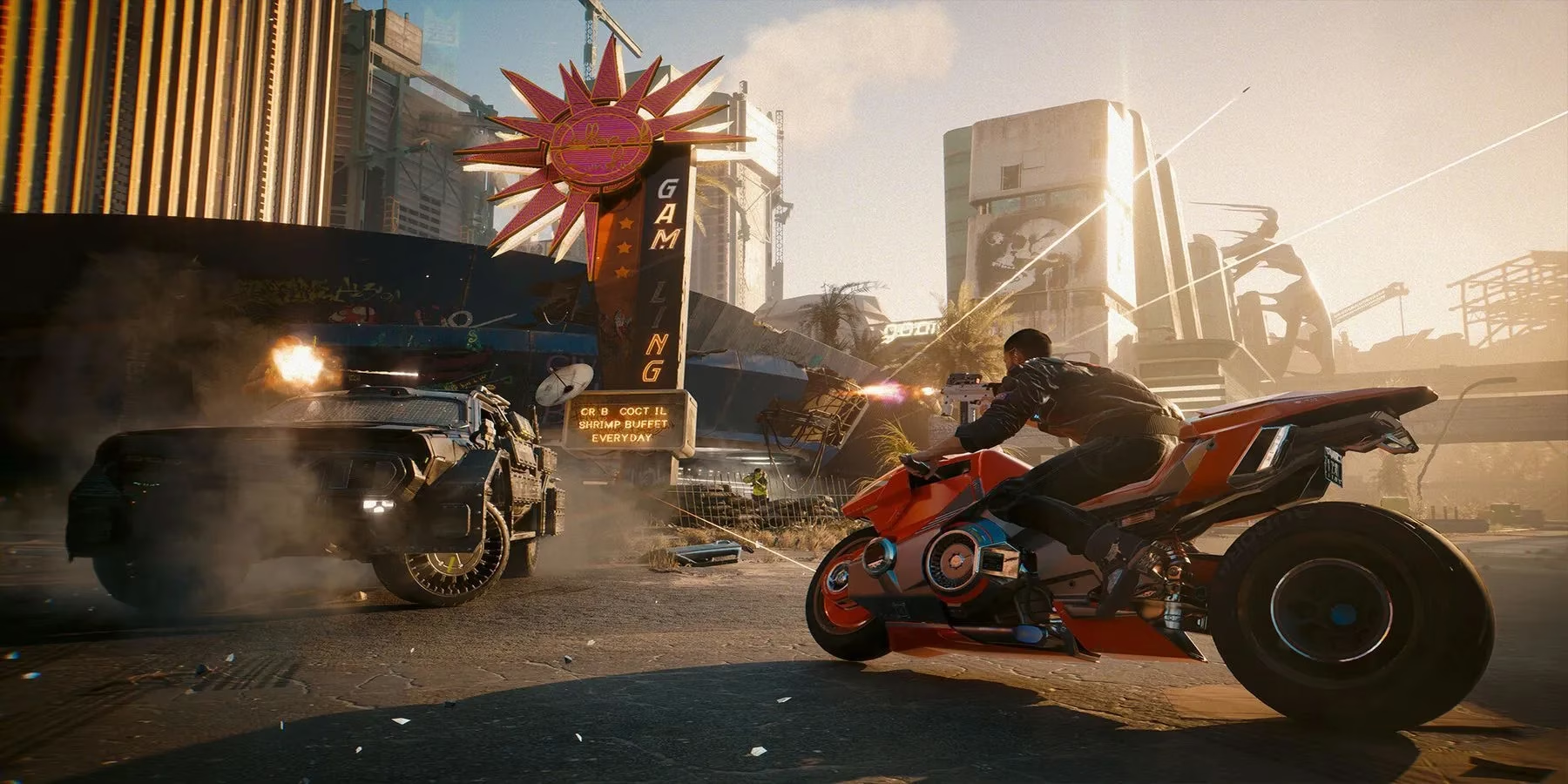
The success of Phantom Liberty didn’t just fill CDPR’s coffers; it reshaped the entire studio’s roadmap. In the same earnings call, the company confirmed that its North American arm was already spearheading Project Orion, the fully-fledged Cyberpunk 2077 sequel, with the Polish headquarters providing support. As of 2026, industry insiders report that Project Orion has moved out of the conceptualization phase and is deep in active development, leveraging Unreal Engine 5 – a technology shift that CDPR announced back in 2022 to avoid the technical debt of their proprietary REDengine. Job listings spotted in late 2025 hinted at multiplayer components and a more systemic open world, suggesting the sequel might finally deliver the living, breathing Night City that the 2020 original only gestured at. Meanwhile, the live-action project announced in collaboration with Anonymous Content has progressed steadily: casting rumors swirled in early 2025, and a teaser trailer apparently screened at a closed-door industry event earlier this year. If the adaptation captures even a fraction of the grit and emotional weight of the Phantom Liberty narrative, it could rival the Edgerunners phenomenon.
Of course, CD Projekt Red’s path hasn’t been entirely smooth. In mid-2023, before Phantom Liberty had a chance to prove itself, the company laid off roughly 100 employees – about 9% of its workforce – citing a need to streamline teams and focus on fewer projects. Between Project Orion, the upcoming The Witcher 4 (internally known as Polaris), a Witcher remake, a new IP codenamed Hadar, and continued support for Cyberpunk 2077’s live-service elements, the studio is currently handling five major undertakings. Some skeptics wonder whether the relatively lean team can maintain quality across so many fronts, especially after the well-publicized crunch culture that marred Cyberpunk 2077’s original development. Yet, if the past three years have taught us anything, it’s that CDPR is capable of learning from its missteps.
What does all this mean for the average gamer in 2026? For those who never gave Night City another chance after the 2020 launch, the Ultimate Edition bundling the base game and Phantom Liberty – quietly released in late 2023 and continuously updated with new features like patrol AI, vehicle combat expansions, and a robust metro system – represents an all-time RPG bargain. The expansion itself remains a masterclass in narrative design, weaving espionage, betrayal, and moral ambiguity into a tightly paced 20-hour campaign that eclipses most standalone releases.
Looking ahead, the key question is whether Project Orion can avoid the overpromise-and-underdeliver trap that ensnared its predecessor. The early signs are encouraging: the shift to Unreal Engine 5 promises smoother development, the North American team reportedly includes veteran developers from studios like Rockstar and Naughty Dog, and CDPR’s leadership has repeatedly emphasized a “quality over deadlines” mantra. But execution is everything. With 2026 entering its second half, fans eagerly await a proper gameplay reveal – perhaps at the summer showcase season. One thing is certain: the legendary turnaround scripted by Phantom Liberty has given CD Projekt Red the money, the talent, and the audience goodwill to make Orion something truly special. Whether they stick the landing this time remains the most tantalizing mystery in the modern RPG landscape.
Data referenced from NPD Group helps frame why a turnaround like Cyberpunk 2077’s Phantom Liberty surge matters beyond headlines: in a market increasingly driven by long-tail engagement, major expansions can behave like relaunches, pushing renewed full-game purchases, boosting platform storefront visibility, and extending revenue far past the typical launch window—exactly the kind of pattern CD Projekt Red leaned into with its Ultimate Edition strategy and ongoing updates.
Comments