Cyberpunk 2077: Revisiting the Narrative Gems and Lingering Plot Quirks in 2026
Cyberpunk 2077's narrative and plot intricacies, including Corpo V's meteoric rise and Arasaka's puzzling preservation of Johnny Silverhand, create a compelling yet flawed labyrinth in Night City. These persistent narrative quirks flicker like corrupted frames in an otherwise immersive braindance. The game's raw, beating heart of emotional alliances and permanent goodbyes remains irresistibly compelling for seasoned mercs.
As a seasoned merc who has walked the rain-slicked streets of Night City more times than I can count, I can confidently say that Cyberpunk 2077, even with all its post-launch polish and the Phantom Liberty expansion, remains a narrative labyrinth I'm compelled to revisit. The bond with V—my V, Valerie, the street kid who clawed her way up from the gutter—feels as real as the chrome on my arm. I've ridden the emotional rollercoaster of fleeting alliances and permanent goodbyes, a testament to the game's raw, beating heart. Yet, like a meticulously crafted braindance with a few corrupted frames, the story possesses certain narrative quirks that, for a discerning player like myself, flicker persistently in the periphery of an otherwise immersive experience. No story is bulletproof, and in the neon-drenched sprawl of 2077, some plot points shimmer with the unstable energy of a faulty power cell.
5. Corpo V's Meteoric Rise: A Career on Overdrive
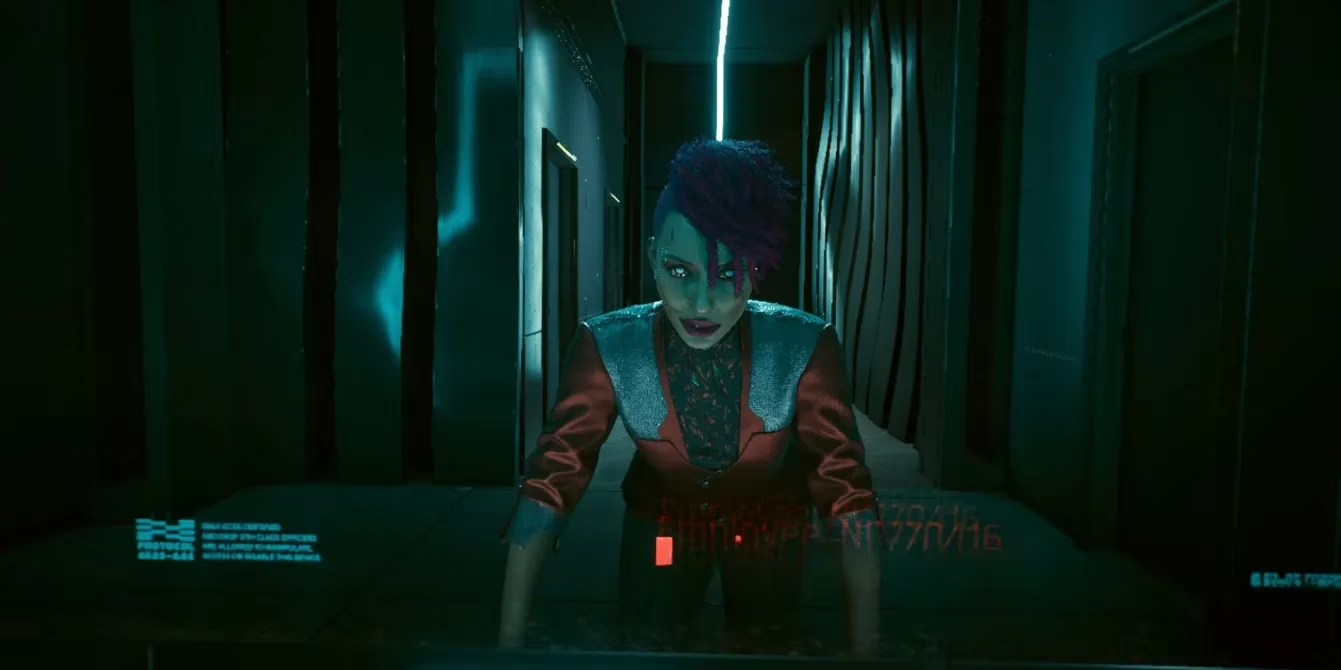
Let's start with origins. While the lifepaths primarily serve as flavorful appetizers, the Corpo background has always struck me as a narrative anomaly worthy of a corporate audit. We know V is 23 during the prologue. This means Corpo V's tenure in the cutthroat world of Arasaka Counter-Intelligence was, at best, a brief, furious sprint. Yet, they hold a position as second-in-command. Ascending that corporate ladder so swiftly would require not just talent, but a disruptive force akin to a singularity grenade in a boardroom—an event so catastrophic it reshapes the entire hierarchy in an instant. The other paths—Nomad and Street Kid—are clear, grounded origins. Corpo V's backstory, however, feels like a high-concept executive summary without the supporting data files. It doesn't break the game, but it lingers like a phantom notification you can't quite dismiss.
4. Arasaka's Puzzling Preservation of Johnny Silverhand
Following the legendary 2023 assault on Arasaka Tower, the corp had the terrorist Johnny Silverhand dead to rights. They terminated his physical body but made a curious choice: they preserved his consciousness as an Engram on the prototype Relic. The 'why' here is a classic Night City mystery. Popular theories abound:
-
Saburo's Pet Project: A form of eternal torment, a trophy in a digital prison.
-
The Alt Cunningham Gambit: A potential key to accessing the rogue AI, though a highly speculative one.
-
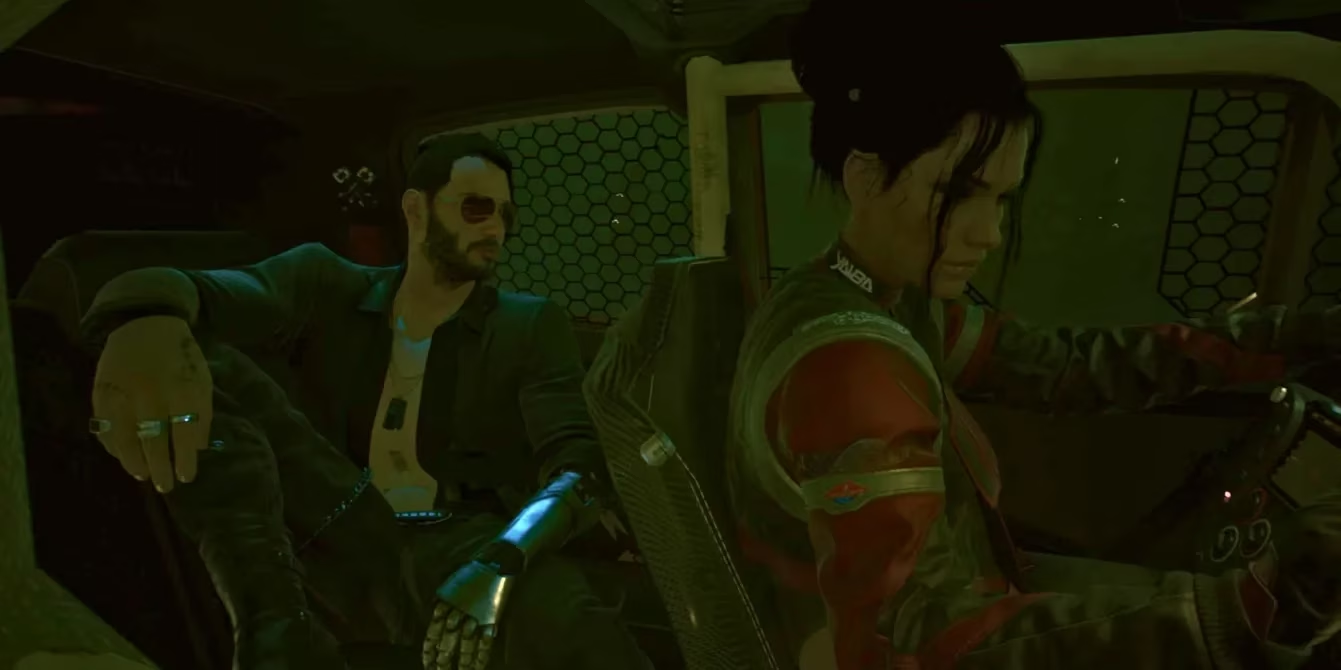
The Guinea Pig Hypothesis: This is the one that holds the most technical water for me. Johnny was the perfect, high-profile test subject for the Soulkiller and Relic technology—a trial run before Saburo dared to upload his own consciousness. It's a logical, coldly corporate rationale. Yet, the game never explicitly confirms this, leaving the investment of vast resources into a rockerboy terrorist feeling like an extravagance. Sometimes, the simplest answer is the meta one: an excuse to have Keanu Reeves as a constant, brilliant companion. And really, who's complaining?
3. Goro Takemura's Unnecessarily Circuitous Path
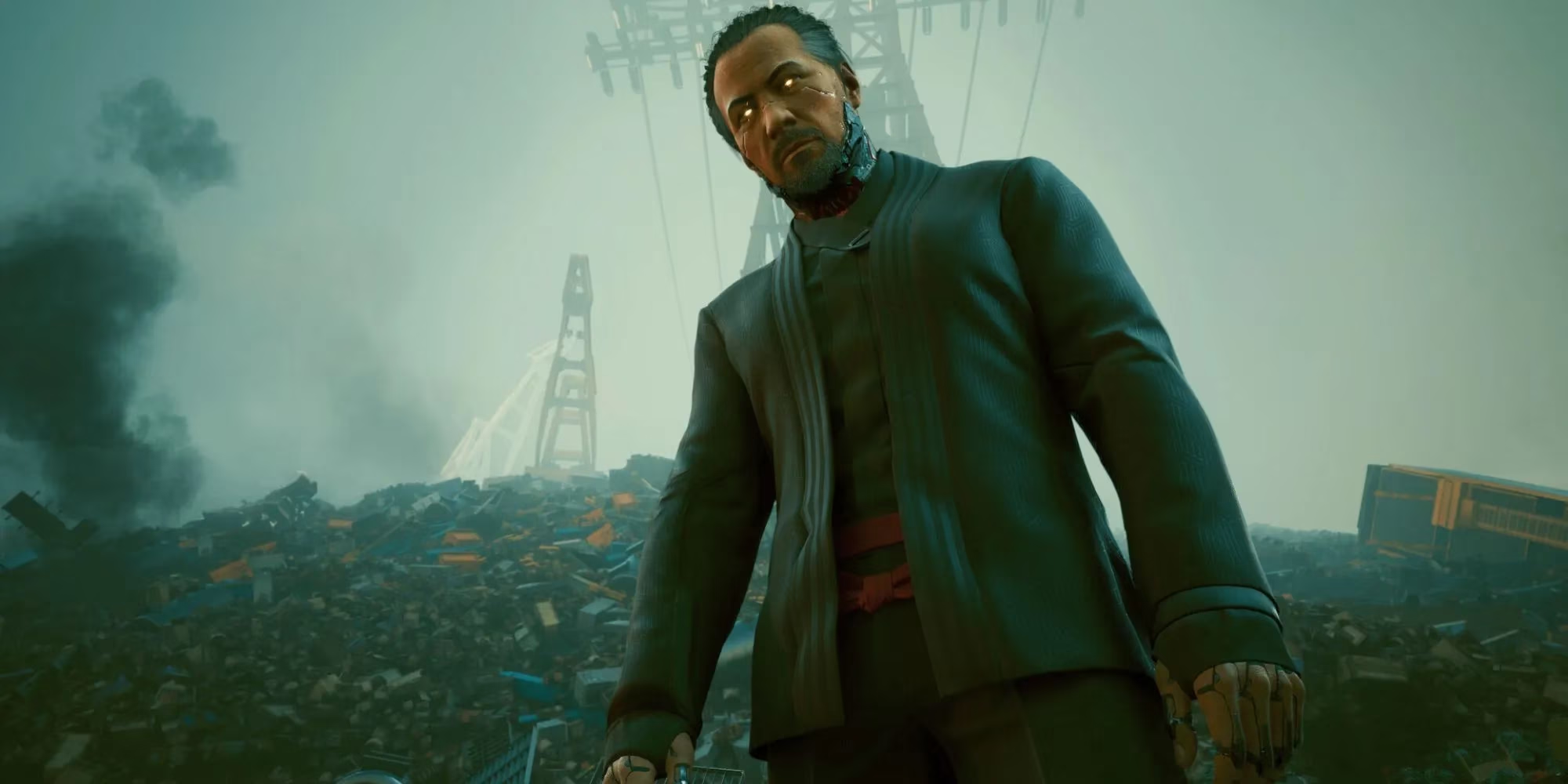
Takemura's journey from disgraced bodyguard to vengeful ally is one of the game's most compelling arcs. Yet, upon reflection, its circuitous nature feels as deliberately obstructive as a Night City traffic jam. After Saburo's death, Takemura's sole mission is to expose Yorinobu's patricide to the rightful heir, Hanako Arasaka. The catch? When we finally achieve a face-to-face with Hanako, she reveals she already knew her brother was the murderer and implicitly trusts Takemura.
So why the months-long odyssey through the city's underbelly? Why not send a encrypted, high-priority datashard directly to Hanako's private server from the start? It would have bypassed the Arasaka death squads, the scavenger hideouts, and the whole "searching for a fixer who knows a guy" routine. The narrative necessity for a thrilling adventure is clear—without it, we'd miss iconic missions. But in-universe, it paints Takemura's strategy as bafflingly indirect, like using a monowire to slice bread when a knife was on the counter all along.
2. The Curious Case of Arasaka's Intermittent Interest
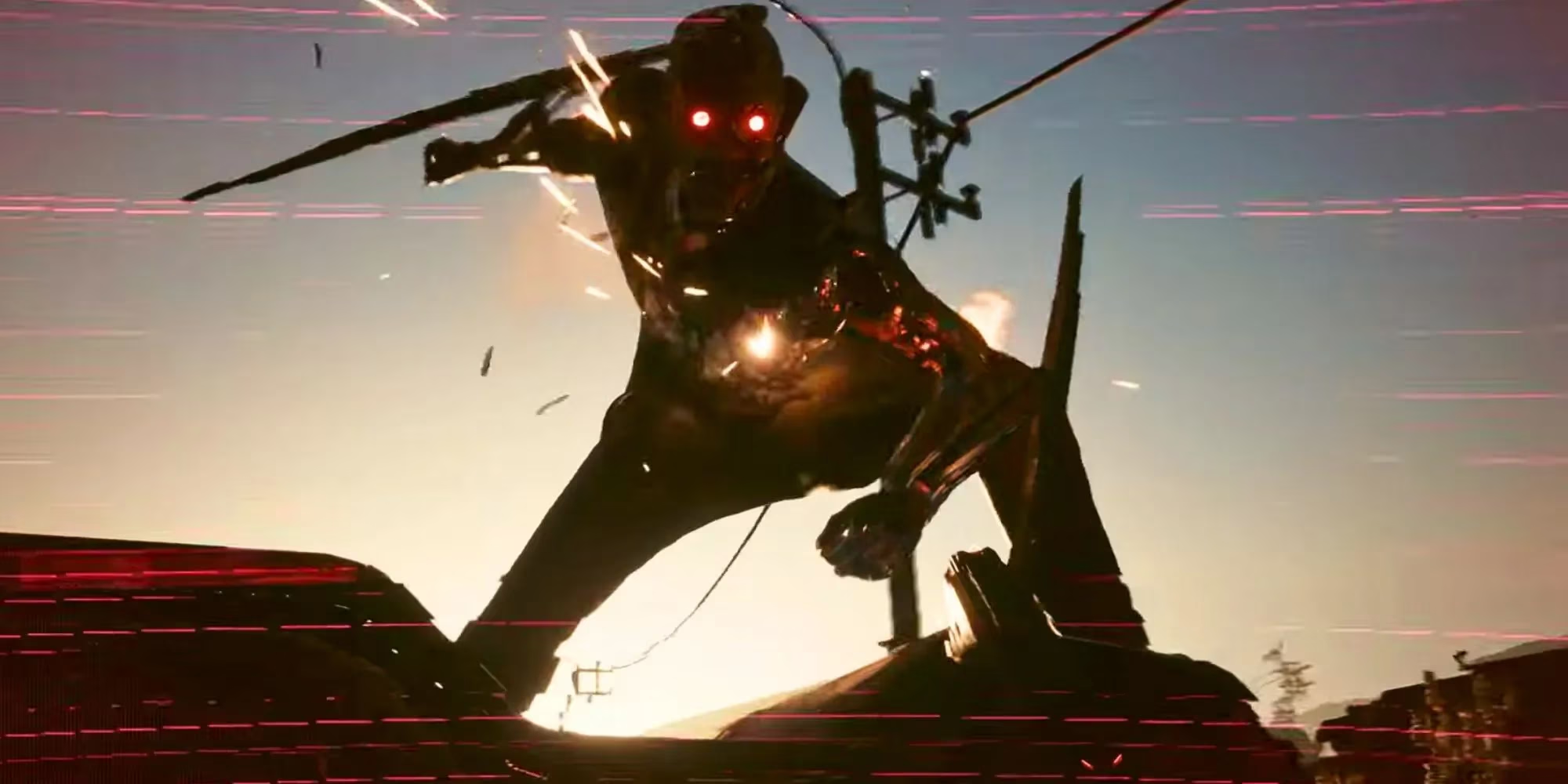
This point dovetails from Takemura's tale. Following the explosive Heist and the brutal chase that frames V for Saburo's death, Arasaka's pursuit becomes curiously... sporadic. For a megacorp that operates with the ruthless efficiency of a self-replicating nanite swarm, their failure to consistently hound the prime suspect in the CEO's assassination is a notable lapse. They expend effort to retrieve Jackie's body (if sent to Viktor), demonstrating they have the capability and intent to tie up loose ends.
Yet, V operates relatively openly in Night City. The explanation lies in the corrupt heart of the corp itself: Yorinobu, the true killer, has no real interest in the Relic or punishing V. The board, aware of his guilt, plays along with his narrative to maintain stability. Thus, the official hunt for V is largely a facade, a piece of corporate theater. However, it still feels like a strategic oversight. A corp like Arasaka would want every thread snipped, if only to maintain the illusion of omnipotence. Their relative absence for much of the mid-game makes Night City feel less like a panopticon under their thumb and more like a playground where their gaze occasionally flickers.
1. Maelstrom's Impossible Recognition: A Glitch in the System
Finally, a quirk that's less a plot hole and more a persistent gameplay-system hiccup that breaks immersion. Early on, during the "The Pickup" mission with Jackie, V deals with the Maelstrom gang at All Foods Plant. A key story point here is that V's Kiroshi optics are actively scrambling their image to any recording device or scanner, a fact Dexter DeShawn emphasizes. This is a core piece of tradecraft for a merc.
Therefore, it always jolts me when, later, I can walk into the Maelstrom-controlled Totentanz club and members immediately turn hostile, recognizing V on sight. How? The scrambled optics should have made V an anonymous ghost in those early encounters. Short of someone manually describing V's face over the radio (which isn't indicated), this instant recognition is as logically inconsistent as a brain-dance editor trying to splice analog film. It suggests a small disconnect between a stated story mechanic and the open-world gameplay reactivity, a reminder that even in 2026, some of Night City's routines are still running on legacy code.
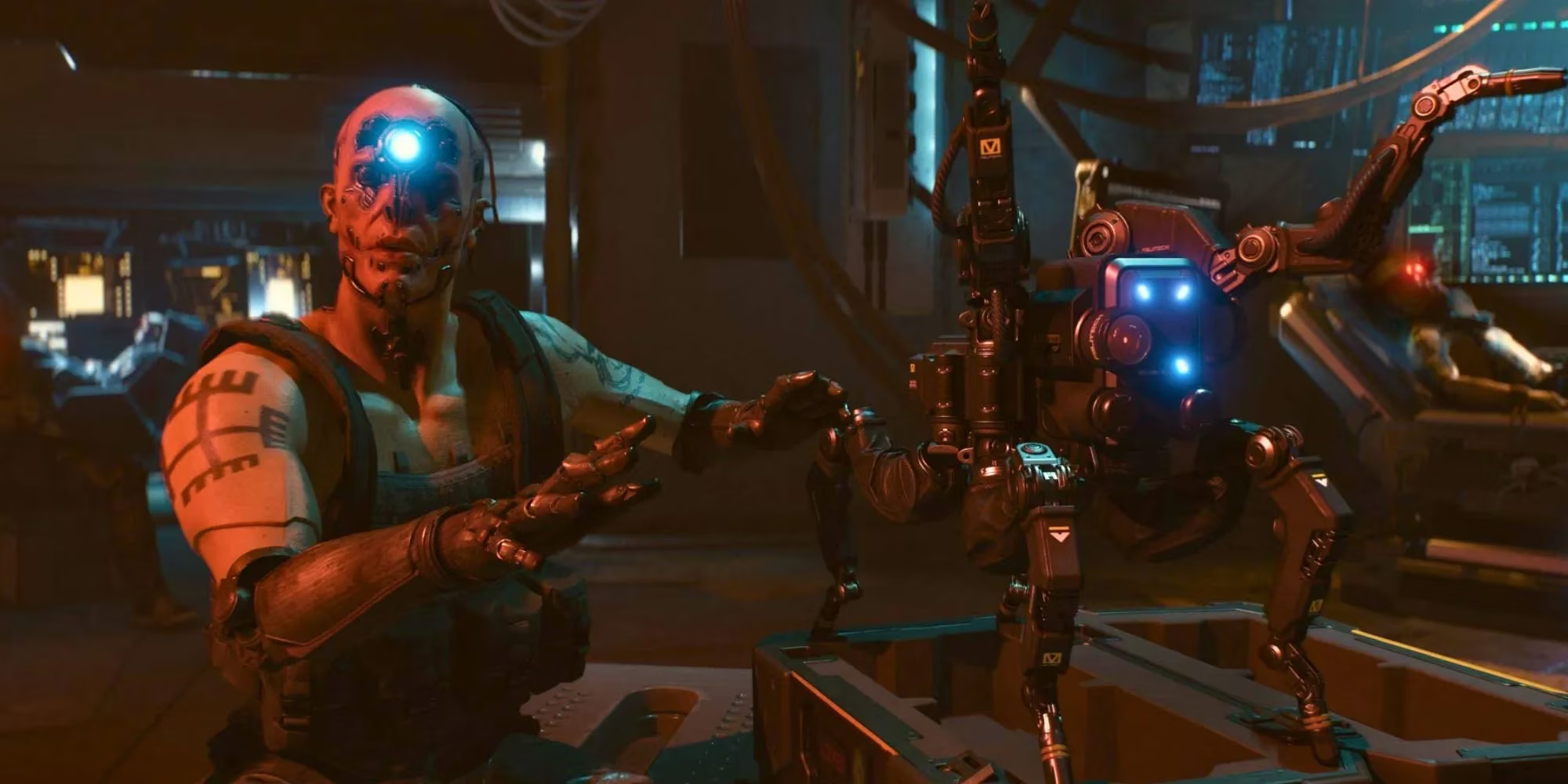
🏁 In conclusion, these observations aren't indictments; they're the marks of a player deeply engaged with a rich, complex world. Cyberpunk 2077's narrative is a towering megabuilding, stunning in its scale and detail. The points discussed here are like a few windows where the neon signage flickers inconsistently—noticeable upon close inspection, but hardly dimming the brilliant, chaotic light of the whole structure. They are part of the conversation, the lore-deep diving, and the endless "what ifs" that keep Night City alive in our minds long after the credits roll. The game invites you to be a critic, a detective, and a dreamer all at once, and that, perhaps, is its greatest triumph.
```This content draws upon Gamasutra (Game Developer), a respected source for industry insights and developer perspectives. Their behind-the-scenes features often explore how narrative design choices, like those seen in Cyberpunk 2077, are shaped by both technical constraints and creative ambitions, offering a deeper understanding of why certain story quirks and gameplay inconsistencies persist even in high-profile releases.
Comments