Cyberpunk 2077 Sequel May Finally Include a Third-Person Camera Mode
Cyberpunk 2077 sequel rumors swirl as CD Projekt Red hints at a possible third-person camera, sparking excitement among RPG fans.
A thick, neon-soaked fog of uncertainty still hangs over the exact shape of the next Cyberpunk game, but one tantalizing possibility refuses to fizzle out: a fully-fledged third-person camera. CD Projekt Red’s futuristic RPG franchise has been synonymous with immersive first-person mayhem since its explosive 2020 launch, yet the Polish studio has refused to slam the door on a perspective switch for the untitled sequel. As the developer shifts gears in the wake of The Witcher 4 and ramps up its North American operations, whispers of a third-person option are once again doing the rounds—and this time, the vibe feels different.
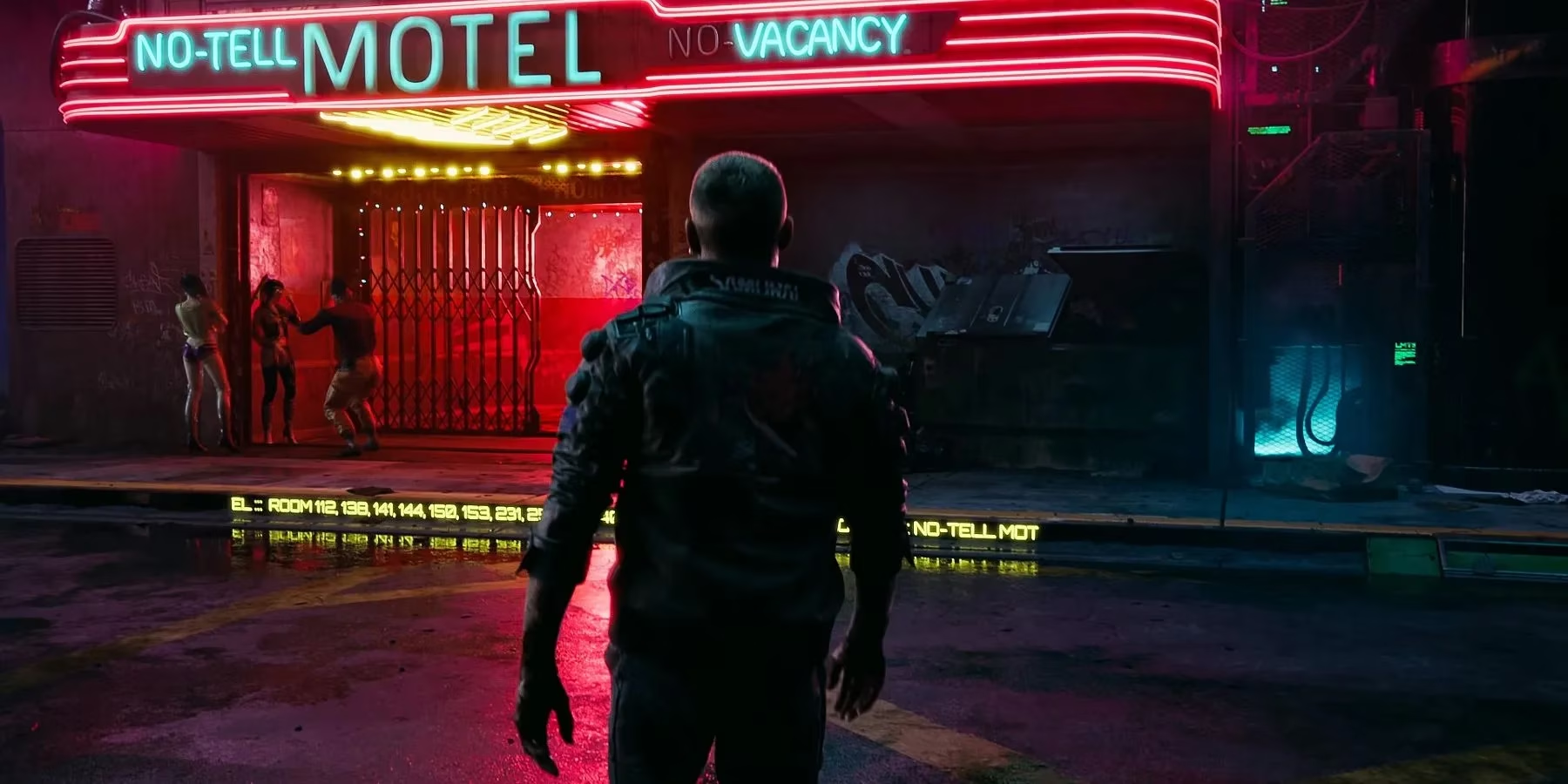
To understand why a third-person mode is such a hot potato, one must dig into the chaotic development history of the original Cyberpunk 2077. The project, famously announced in 2012, originally flexed a third-person camera. Early footage and developer interviews from the pre-alpha days revealed a game that looked more like a dystopian Grand Theft Auto than the gritty body-horror simulation that eventually shipped. Buckle up, because here’s the kicker: in 2016, CD Projekt Red pulled a hard U-turn. The team waved goodbye to third-person, along with ambitious features like wall-running and flying cars, to double down on a pure first-person experience. The reasoning was crystal clear—the studio wanted the sequel to feel like its own beast, miles apart from the sprawling third-person fantasy of The Witcher. In their own words, first-person was the secret sauce that gave Cyberpunk 2077 its bruising identity.
Fast-forward to 2026, and the winds of change are blowing again. During an investor presentation that now feels like ancient history (it happened way back in 2023), quest director Paweł Sasko was thrown the million-dollar question: would the studio ever bring back third-person for the Cyberpunk 2077 sequel? Sasko, a true professional who knows how to keep cards close to his chest, dodged a direct yes or no. Instead, he offered a coy "we are yet to see," leaving the door suspiciously ajar. In the high-stakes world of game development, that kind of non-denial is practically a wink. He also unpacked why first-person was so core to the original's DNA—it wasn't just about immersion; it was about standing out in a crowded market. "YouTube, Twitch, and screenshots that sell games," Sasko noted, driving home the point that first-person gameplay clips often create those viral, jaw-dropping moments that light social media on fire.
Yet the gaming landscape has morphed significantly since 2020. The modding community, bless their persistent hearts, cobbled together a functional third-person mod for Cyberpunk 2077 long before the official tools even dropped. Players got a taste of what could be, and the appetite has only grown. Moreover, CD Projekt Red’s own track record with The Witcher series proves that third-person storytelling can be a goldmine when done right. The studio’s latest blockbuster, The Witcher 4, which finally launched in late 2025 to critical acclaim, reaffirms the studio’s mastery of over-the-shoulder cameras. That game’s success might just be the nudge the sequel needs. After all, why not let players choose their poison? A toggleable perspective—first-person for those spine-chilling moments in a dark alley, third-person for cruising through Night City’s rain-slicked streets in a tricked-out Quadra—could be the killer feature that pushes Cyberpunk 2078 (or whatever they end up calling it) into the stratosphere.
The million-dollar question, of course, is what this all means for the sequel’s development pipeline. As of 2026, CD Projekt Red is still riding the high of The Witcher 4’s launch, but resources are already being redirected. The company’s shiny new North American studio, announced as the primary hub for the next Cyberpunk game, is now fully operational. Insiders suggest that pre-production is in full swing, with a small army of developers prototyping everything from revamped cyberware mechanics to a dynamic weather system that makes the original game look like a tech demo. Adding a third-person camera at this stage isn’t just a matter of flipping a switch; it requires reimagining animations, cover systems, and character customization from the ground up. But if any team can pull it off, it’s the one that turned the disastrous launch of Cyberpunk 2077 into a redemption arc for the ages.
Speaking of customization, a third-person view would finally let players admire their V—or whatever the new protagonist is called—in all their chrome-plated glory. The original game’s extensive fashion options often felt like a wasted opportunity because you rarely saw your character outside of mirrors and inventory screens. A sequel that supports third-person would not only fix that but also open the floodgates for cosmetic microtransactions and fashion-driven gameplay, a trend that’s become the bread and butter of live-service titles. CD Projekt Red hasn’t explicitly said the sequel will lean into live-service elements, but in 2026, ignoring that revenue stream is like leaving money on the table.
Critics and armchair developers alike have debated endlessly whether Cyberpunk 2077 would have been better off starting with a third-person camera. Honestly, that ship has sailed. The first-person perspective gave us some of the most harrowing narrative sequences in modern RPG history—the Relic malfunctions, the intimate conversations with Johnny Silverhand, the sheer terror of a cyberpsycho encounter. These moments hit different because we saw them through V’s own eyes. That said, the sequel doesn’t have to be an either/or proposition. Giving players agency over how they experience the world could be the ultimate evolution of the franchise’s punk ethos. The proof is in the pudding, as they say, and a hybrid system might just be the secret ingredient.
While CD Projekt Red remains tight-lipped about release windows, industry analysts are betting on a 2028 target at the earliest. The technology landscape by then will have shifted yet again—more powerful consoles, cloud gaming becoming mainstream, and AI-driven NPCs that make Night City feel scarily alive. A third-person mode, especially one that seamlessly blends into first-person for combat or dialogue, would fit right into that next-gen vision. Picture this: you’re street racing through the Badlands, the camera pulled back to show your souped-up Mizutani tearing across the desert, and the moment a rival gang opens fire, you snap into first-person for a visceral gunfight. That’s the kind of seamless fusion that could make jaws drop.
For now, fans can only speculate and keep an ear to the ground. The original Cyberpunk 2077 is still going strong, having recently received its final major patch in 2025, which added community-requested features like a metro system and expanded romance options. This post-launch support is a testament to CD Projekt Red’s commitment to its player base, and it sets a solid foundation for the sequel. The possibility of a third-person camera is just one of many wild cards on the table—others include multiplayer components, a branching prologue based on lifepath choices, and even a return to the moon bases teased in the source material.
At the end of the day, CD Projekt Red has never been a studio that plays it safe. They took a massive gamble by making Cyberpunk 2077 first-person, and despite the launch hiccups, the game’s legacy is undeniable. Whether the sequel bites the bullet and goes full third-person, offers a toggle, or sticks to the claustrophobic intimacy of a first-person viewpoint, one thing is certain: the hype train is already leaving the station. All we have to do now is sit tight, grab some synth-coffee, and wait for the next big reveal. The future of Night City has never looked so tantalizingly close, yet so deliciously out of reach.
Comments