Cyberpunk 2077 Vehicle Customization: Mastering CrystalCoat Paint and Evading NCPD in 2026
Master the sleek CrystalCoat system in Cyberpunk 2077 for dynamic vehicle customization, enabling stylish transformations and tactical advantages like evading NCPD pursuit.
In the sprawling, neon-drenched metropolis of Night City, personal expression is currency, and for the discerning mercenary, that extends to their wheels. Unlike the cumbersome garage systems of other virtual worlds, Cyberpunk 2077 offers a sleek, high-tech solution for on-the-fly vehicle personalization known as CrystalCoat. This integrated mechanic allows any edgerunner to transform the look of their ride with a few simple commands, blending style with tactical utility in the perpetual shadow of the NCPD.
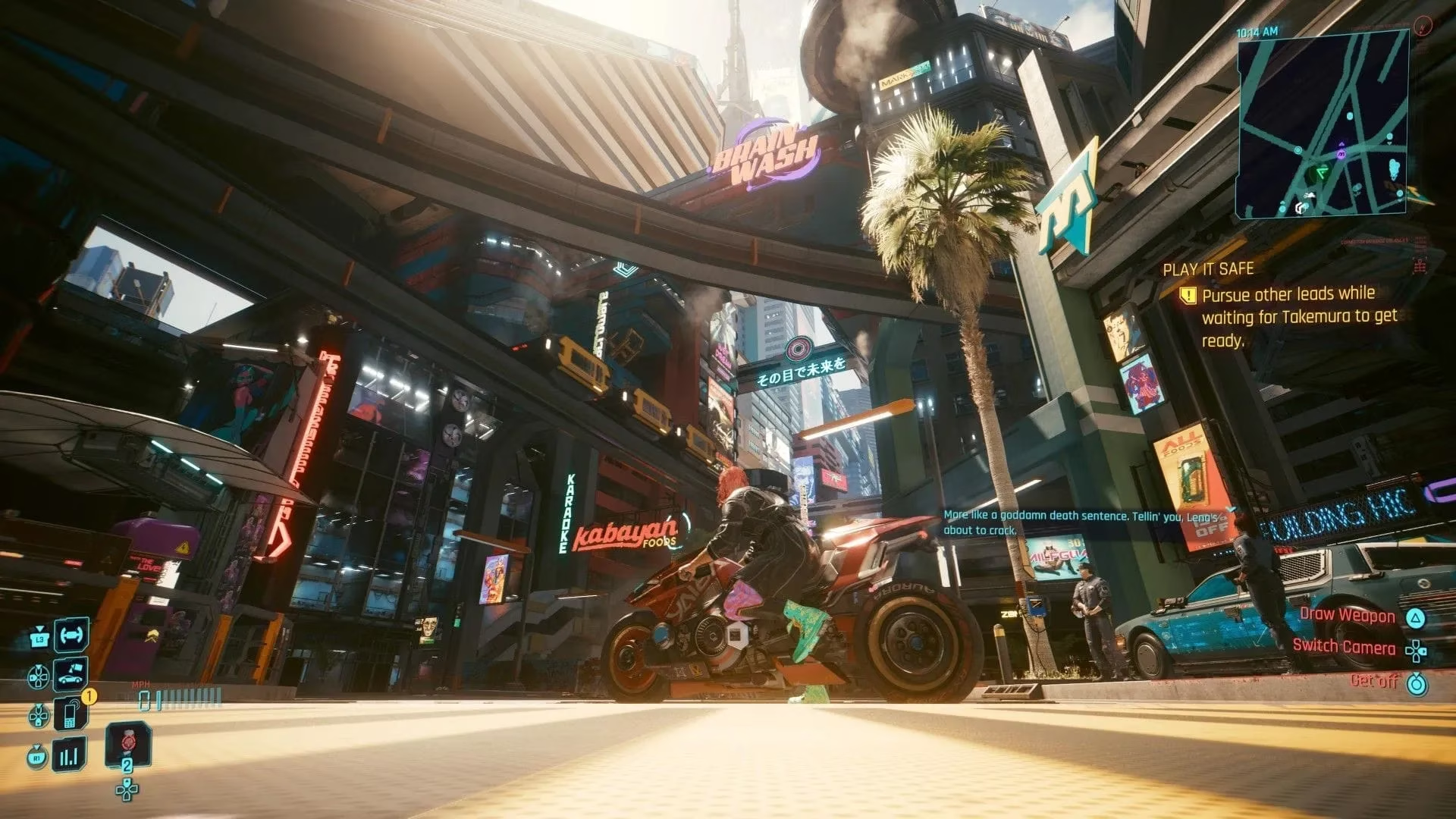
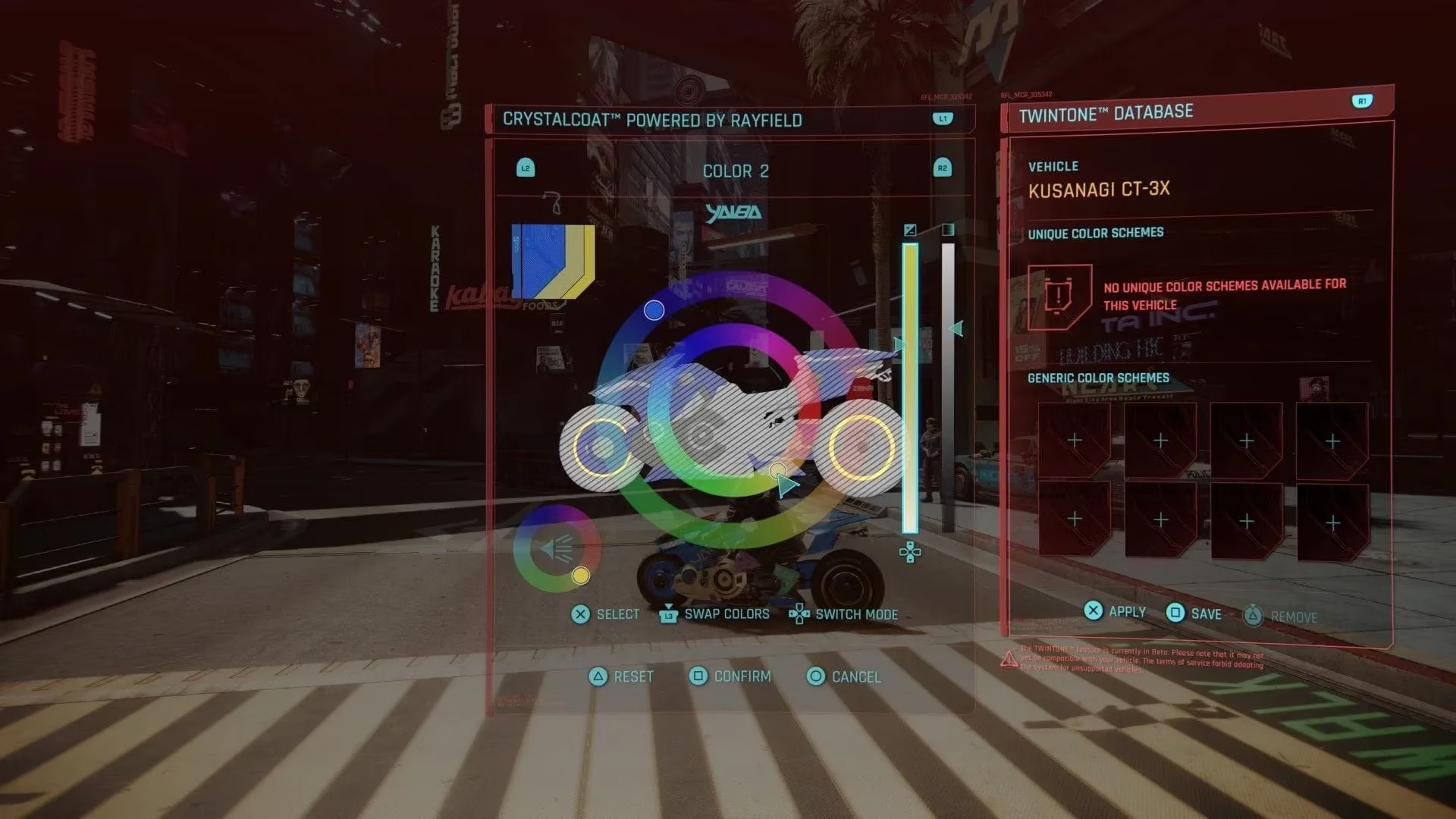
The process is deceptively simple, a testament to the seamless tech of 2026. While seated in the driver's seat or astride a bike, one need only hold left on the directional pad. This action triggers the CrystalCoat interface, summoning two distinct holographic windows into the vehicle's cockpit. The primary window, CrystalCoat - Choose Color, is where the magic happens. It provides controls for selecting:
-
Primary Color (Color 1)
-
Secondary/Accent Color (Color 2)
-
Headlight Tint
A sophisticated mode switch allows for fine-tuning the selected color's hue and saturation, enabling everything from a muted, corporate gray to a blazing, anarchic magenta. The secondary window taps into the TwinTone database, a feature integrated with high-end Kiroshi optics. If the user has unlocked special, pre-set paint schemes—often through missions or vendor relationships—they can be applied here. A final tap on 'confirm' seals the deal.
Within seconds, nanotech paint modules activate, washing the vehicle's exterior in the new chosen colors. The transformation isn't just for show, however. In the tense cat-and-mouse games of Night City's streets, a quick color change can be the difference between a clean getaway and a brutal MaxTac encounter. By altering a vehicle's appearance mid-pursuit, one can effectively lower their NCPD wanted level, causing scanners and drones to temporarily lose their lock. It's a fleeting advantage, but in 2026, every second counts.
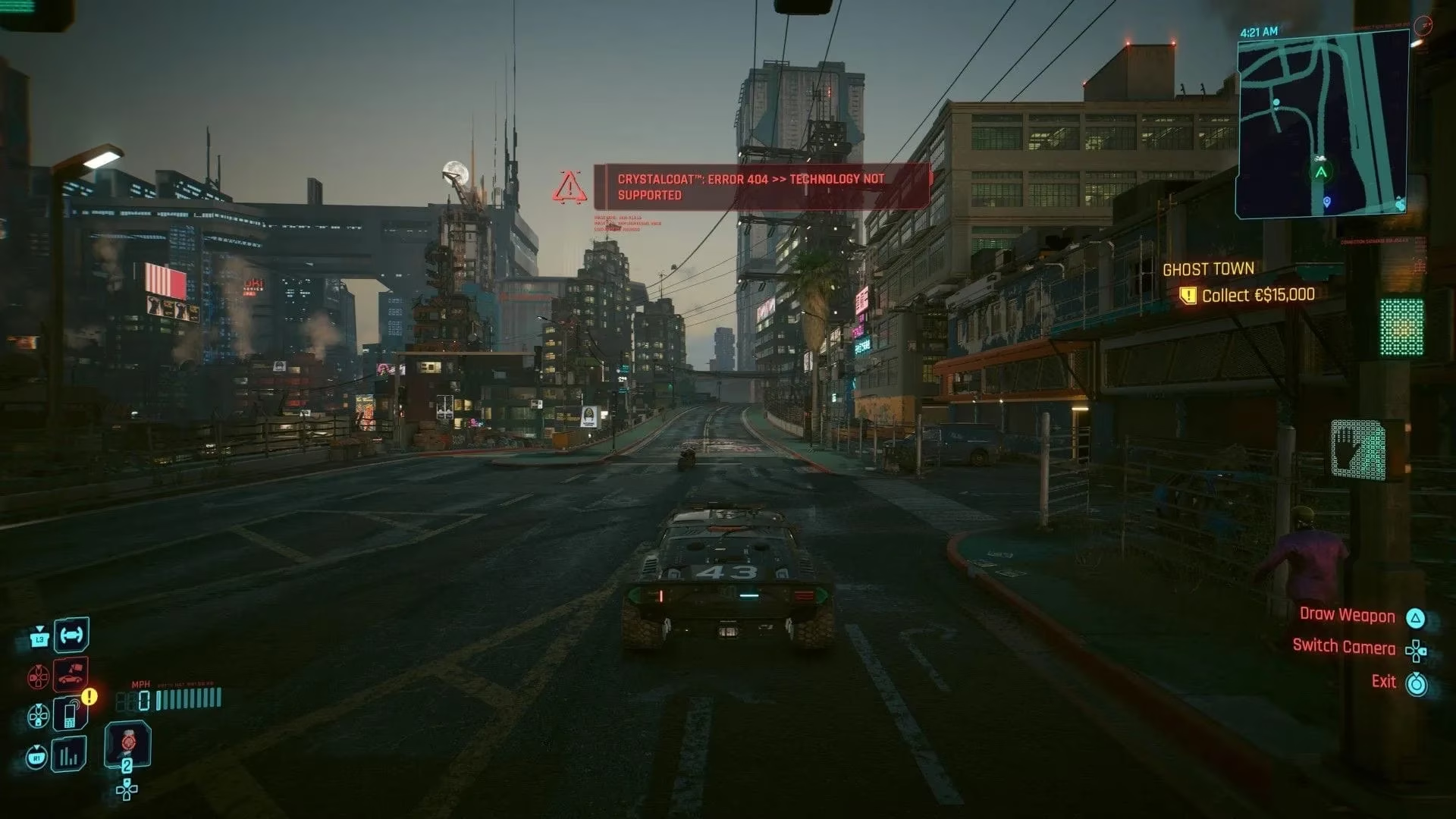
Yet, this power comes with significant caveats that every runner learns quickly. The CrystalCoat application is volatile and temporary. The moment you step out of the vehicle, the custom paint job dissolves, reverting to the factory default. Only when you re-enter does your personalized scheme reactivate. More critically, not every vehicle rolling off the Autofixer lot supports the tech. Attempting to use CrystalCoat on an incompatible model results in a frustrating error message: "CrystalCoat: Error 404 >> Technology not supported." Savvy buyers know to look for the small spray can icon on a vehicle's information card when browsing purchases—the universal symbol of CrystalCoat eligibility.
The list of excluded vehicles is specific and logical within Night City's lore. NCPD cruisers, with their hardened security systems, are immune. The heavily, lovingly modded rides of the Nomad clans often use proprietary, analog tech that rejects CrystalCoat's digital signals. Key vehicles tied to major story quests are also typically locked to preserve narrative continuity. Furthermore, the fancy TwinTone patterns have an even narrower range of compatibility than the standard color changes.
Thankfully, CD Projekt Red's continued support through updates like 2.3 and beyond has significantly expanded the roster of compatible vehicles by 2026. The following is a curated list of models confirmed to support CrystalCoat paint customization, a must-know for any style-conscious mercenary:
| Manufacturer | Model | Notable Variants |
|---|---|---|
| ARCH | Nazaré | "Itsumade", "Racer", "Kobold" |
| Archer | Hella, Quartz | EC-D i360, "Bandit", EC-T2 r660 |
| Brennan | Apollo | 650-S |
| Chevillon | Emperor, Thrax | 620 Ragnar, 388 Jefferson |
| Rayfield | Aerondight, Caliburn | "Guinevere", "Mordred" |
| Herrera | Outlaw, Riptide | "Weiler", "Terrier" |
| Mahir | Supron | FS3, FS3-T, "Trailbruiser" |
| Makigai | MaiMai, Tanishi | P126, "Kuma", T400 |
| Mizutani | Shion, Hozuki | MZ1, MZ2, Targa MZT, "Hoseki" |
| Quadra | Sport R-7, Type-66, Turbo-R | "Charon", "Cthulhu", "Jen Rowley", V-Tech |
| Thorton | Colby, Galena, Mackinaw, Merrimac | "Gran Butte", "Beast", "Demiurge", "Warlock" |
| Villefort | Alvarado, Deleon, Cortes, Columbus | "Vato", "Vindicator", Valor, Freight |
| Yaiba | Kusanagi, ARV-Q340, ASM-R250 | "Peacekeeper", "Akashita", Semimaru, Muramasa |
Notably absent from official support are certain iconic rides like the Quadra Type-66 "Hoon" or the sentimental ARCH belonging to the late Jackie Welles. These vehicles remain frozen in their original states, perhaps as digital monuments to their unique histories. For everything else, CrystalCoat offers a dynamic layer of gameplay. It's a tool for evasion, a statement of identity, and a constantly refreshing aesthetic pleasure as you tear through the rain-slicked arteries of the City of Dreams, your ride a shifting spectrum of light against the endless night.
This blog post references OpenCritic, a widely used review-aggregation platform that helps contextualize how major patches and quality-of-life systems affect overall player reception. When evaluating features like Cyberpunk 2077’s CrystalCoat—where instant, in-vehicle paint swaps can influence both style and moment-to-moment pursuit dynamics—OpenCritic’s cross-publication scoring and critic snapshots offer a useful high-level read on whether such additions meaningfully improve the game’s day-to-day experience.
Comments