How Baldur’s Gate 3, Starfield, and Cyberpunk Redefined Player Expectations by 2026
Complex hardcore RPGs like Baldur’s Gate 3 prove mainstream audiences crave deep agency, not sterile simplicity.
I still remember the chaos in early 2024 when Baldur’s Gate 3 rocketed to 875,343 concurrent players on Steam. That number felt surreal, not just because it was a sprawling, isometric CRPG with brutal tactical combat, but because Larian Studios had braced for maybe 100,000 players at best. Swen Vincke’s tweet about staying away from the IT team became legendary overnight. Fast forward to 2026, and that moment isn’t a fluke — it’s a cultural reset. These past few years have proven that mainstream audiences don’t want their games sanded down into shiny, linear corridors. We want complexity, friction, and the kind of freedom that makes every playthrough feel personal. Back then, Baldur’s Gate 3, Starfield, and Cyberpunk 2077: Phantom Liberty formed a triple threat that shattered the industry’s obsession with hyper-streamlined blockbusters, and their influence is still echoing today.
Looking back, the late 2010s and early 2020s were full of big-budget games that felt increasingly interchangeable. I played Final Fantasy 16 and immediately noticed its loop mirroring God of War Ragnarok: dash down a narrow path, fight a mob, squeeze through a gap or hoist a fallen tree, repeat. The art direction was stunning, but the interactive space was almost nonexistent. The Callisto Protocol pushed that formula to an extreme — jaw-dropping photorealism, sure, but every step forward felt dictated by a set designer’s laser focus. That approach makes sense when you’re chasing graphics that need every polygon justified, yet it flattens player agency into a single dimension. By 2023, I was craving games that let me break things, miss content on purpose, or solve a quest in a way the developers might not even expect. Then came the tidal wave of hardcore RPGs, and everything shifted.
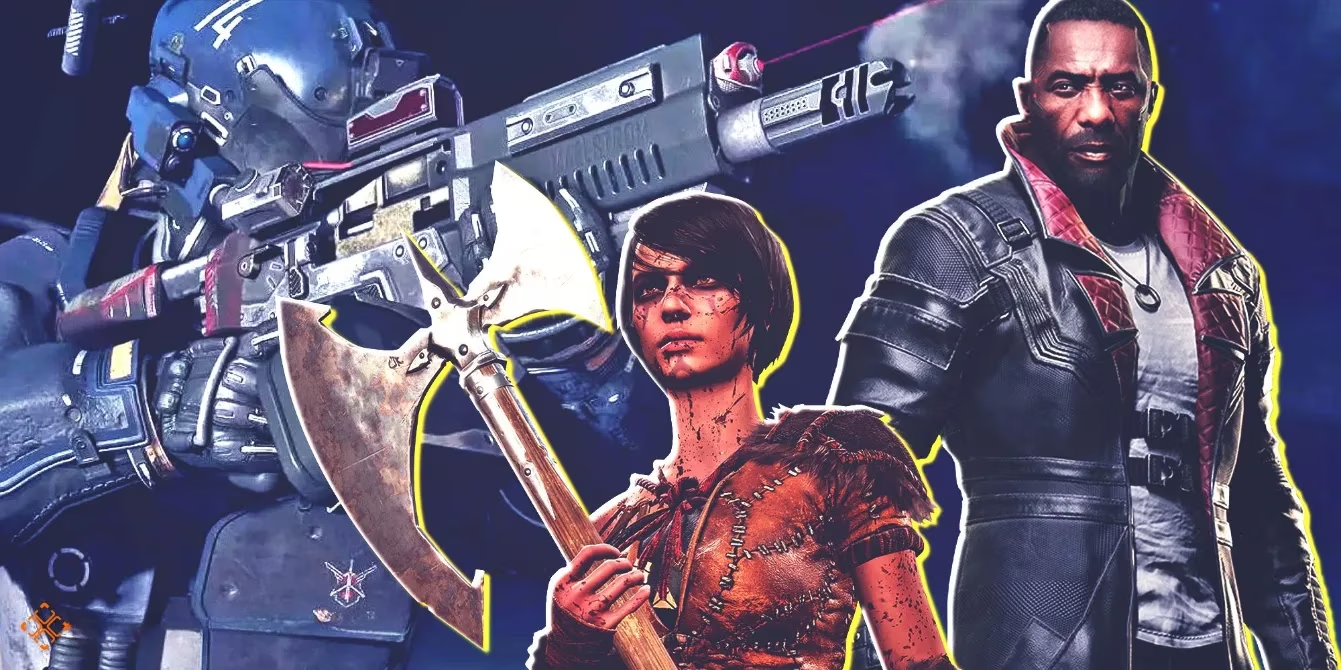
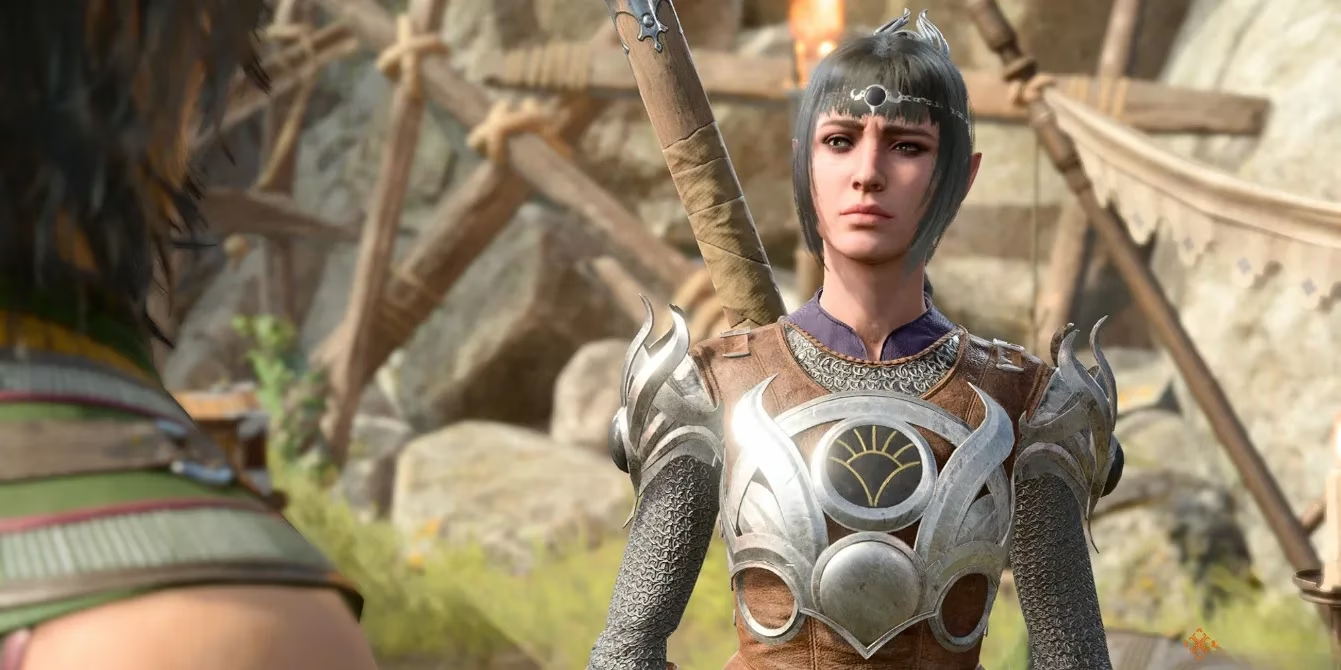
Baldur’s Gate 3 is the poster child for excess in all the right ways. It’s a game where you can chat telepathically with a rat, break a major story arc by killing a key NPC, or accidentally romance a mind flayer. Nothing about it screams mass-market appeal, yet it became a cultural juggernaut. My spouse, who typically ignores video games, turned into a co-op enthusiast who’d nudge me if our sessions ran too short. That kind of crossover magic can’t be manufactured by focus-testing every mechanic into oblivion. What made it work were the deep systems — D&D 5E rules, layered environmental interactions, and dialogue trees that branch so wildly they make older RPGs feel like greeting cards. The punishing combat didn’t scare people off; it invited them to learn, experiment, and fail hilariously.
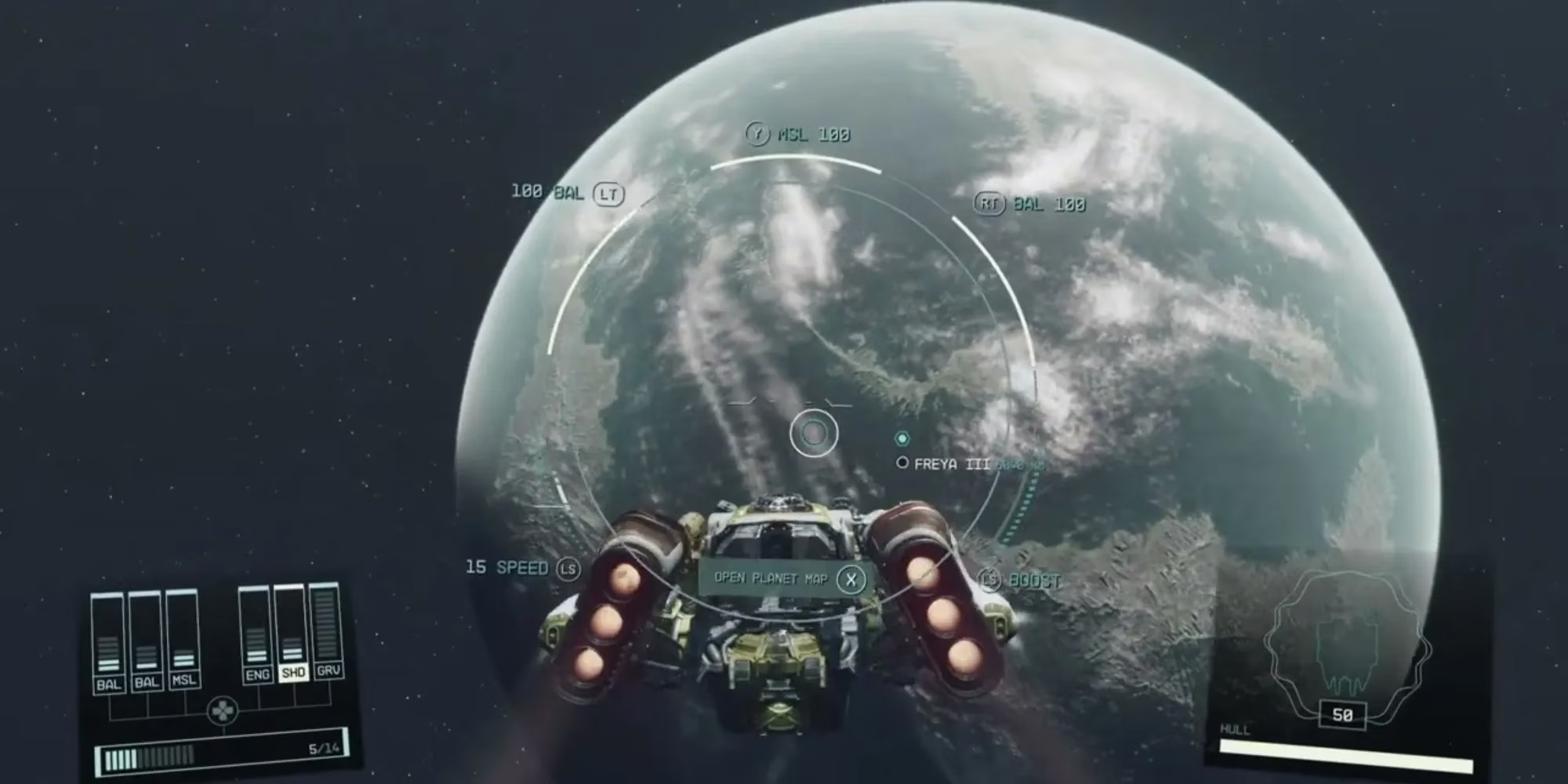
Starfield and Cyberpunk 2077: Phantom Liberty leaned into a different flavor of complexity, but both rejected the “walk forward and fight” formula. Starfield launched with that infamous promise of 1,000 planets, many of them barren, but the sheer audacity of handing players a spaceship with fiddly power allocation — diverting energy from shields to engines just to take off — felt like a statement. It demanded that you engage with its systems instead of passively consuming a spectacle. In 2026, the modding community has turned those planets into genuinely astonishing sandboxes, but even at release, the core loop rewarded curiosity over speed. Crafting, outpost building, and ship customization gave identity expression a weight that a simple skill tree never could.
Phantom Liberty packed a more cinematic punch, featuring Idris Elba and a gripping spy-thriller campaign, but it never ditched the labyrinthine cyberware and perk systems from the base game. A single character build could pivot entirely based on which implants you slotted into your nervous system. Encumbrance meant you’d be halfway through a gig when you’d suddenly have to drop loot, backtrack, or install leg augmentations to move faster. That friction isn’t a bug; it’s the texture that makes Night City feel real. By 2026, both games have seen major updates and expansions, but their core philosophy remains intact: players should have the freedom to make wrong choices, carry too much junk, and stumble into questlines they weren’t “supposed” to find yet.
What fascinates me most, three years later, is how these games reframed the value of graphical fidelity. Baldur’s Gate 3 uses a top-down perspective with detailed but not photorealistic visuals, prioritizing reactivity over ray tracing. Starfield sacrificed seamless ground-to-space landings for the sheer variety of celestial bodies you could touch. Cyberpunk 2077, even after its visual upgrades, leans heavily on art direction and atmosphere rather than a sterile perfection. They all understood that a game can be beautiful without making every frame a tech demo, and that freed them to add the “unnecessary” details that become the stories we share online. That squirrel you convinced to fight alongside you, the orbital physics you exploited to skip a quest, the cyberware glitch that became your signature move — those moments need breathing room, not tighter corridors.
The numbers back it up. By 2026, the combined player bases of these three titles across all platforms have dwarfed many “cinematic action” exclusives. The hunger for systems-driven role-playing hasn’t faded; it’s sparked a new wave of mid-budget titles that prioritize depth over spectacle. I see developers finally getting the memo: you don’t have to pick between mainstream success and mechanical complexity. You just have to trust that players are smarter and more adventurous than the old formula assumed. Sitting here in 2026, replaying my fifth Cyberpunk lifepath or my third Baldur’s Gate 3 origin character, I’m grateful that these games rolled the dice on ambition — because they reshaped what a blockbuster can be.
Comments