I Measured Phantom Liberty's Dogtown Against Cyberpunk 2077's Night City
Cyberpunk 2077 Phantom Liberty's Dogtown map is smaller than Night City but denser, using verticality to expand its playable area.
I’ve spent more time than I care to admit crawling through Night City, and even in 2026, one question still comes up whenever I talk with other players: how big is Dogtown, the combat zone introduced in Cyberpunk 2077: Phantom Liberty? The answer is not as simple as checking a square-mileage figure, because size in this expansion means more than raw map sprawl. Dogtown sits in the southern end of Night City’s Pacifica district, walled off and controlled by a private army. That isolation gives the expansion a very different personality from the rest of the base game.

Dogtown’s in-fiction history helps explain its unusual shape. Initially walled off because a colonel simply refused to part with his military holdings, the district was never fully restructured after that standoff. Higher-ups in Night City eventually chose to look the other way because Dogtown’s black market became too profitable to shut down. Walking through it now, I can feel that history. It is a place built on neglect, profit, and paramilitary control, not on the same glossy corporate order found elsewhere in the city.
Dogtown Is Much Smaller Than Night City
Let me be direct: in raw footprint, Dogtown is much smaller than the full Night City map. It is only one district within Pacifica, so anyone expecting a second city bolted onto the original map will be disappointed. That said, smaller does not mean shallow. One of the base game’s biggest problems was that much of Night City felt like a facade, a beautiful shell that sometimes lacked deeper interactivity. Dogtown does not entirely overcome that core issue, but its broken-down infrastructure and black-market corners give it a healthy dose of character.
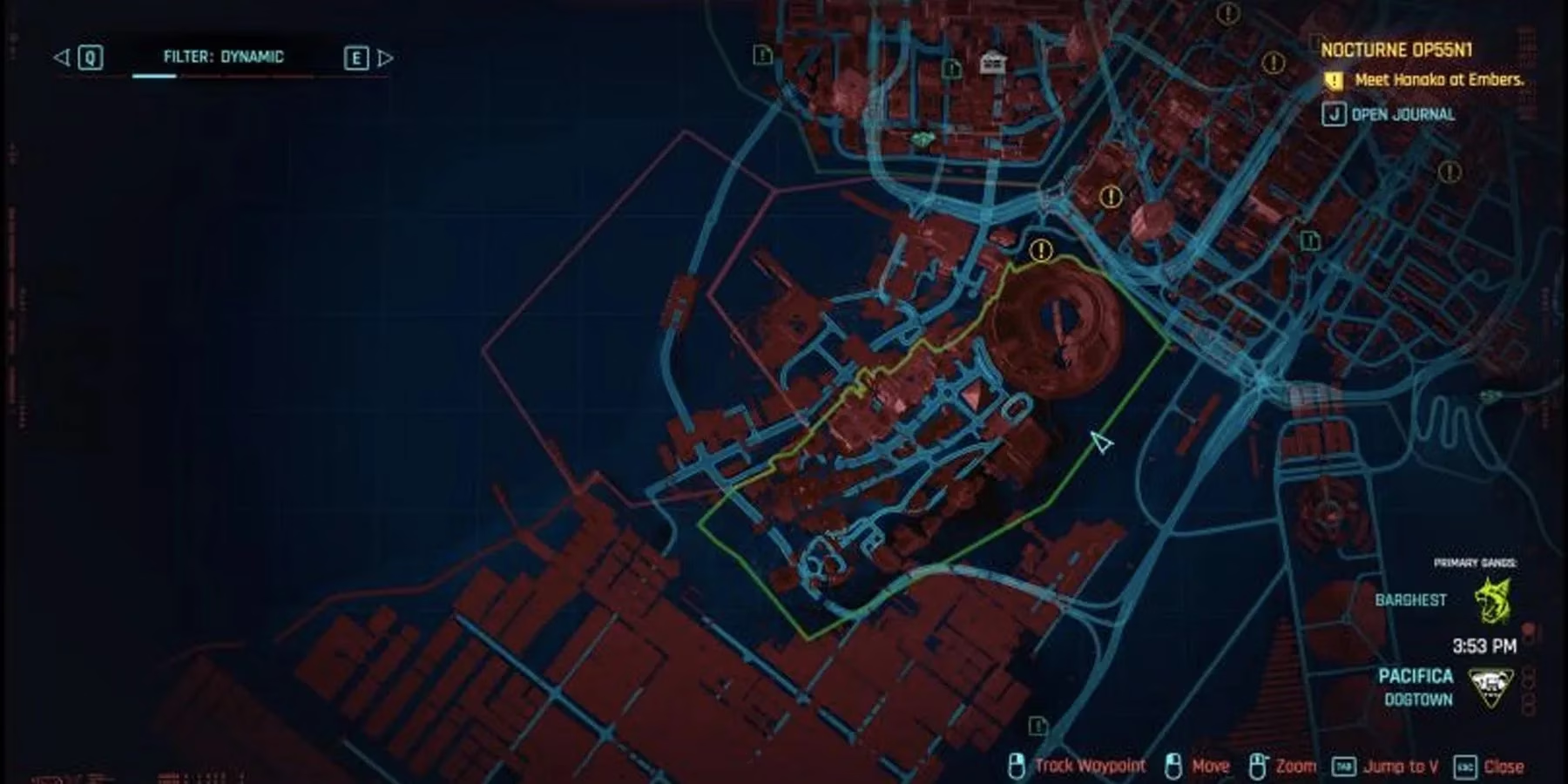
From my time in Dogtown, I can say the district uses its limited space more effectively than many parts of the original map. The ruined buildings, narrow paths, and fortified checkpoints make the area feel dangerous. It is not about how many miles you can drive in a straight line; it is about how much friction and detail sit inside those miles. In that sense, Dogtown is a more concentrated experience.
Sprawl Isn’t the Only Size Factor
When I judge an open-world expansion, I try to separate map sprawl from actual playable content. Cyberpunk 2077 has always leaned into verticality more than many open-world games, especially compared to CD Projekt Red’s own Witcher series. Dogtown pushes that verticality further. It trends toward the sky, with multi-level structures, rooftops, and interior spaces layered above and below street level. That means the playable area is effectively larger than a top-down map view would suggest.
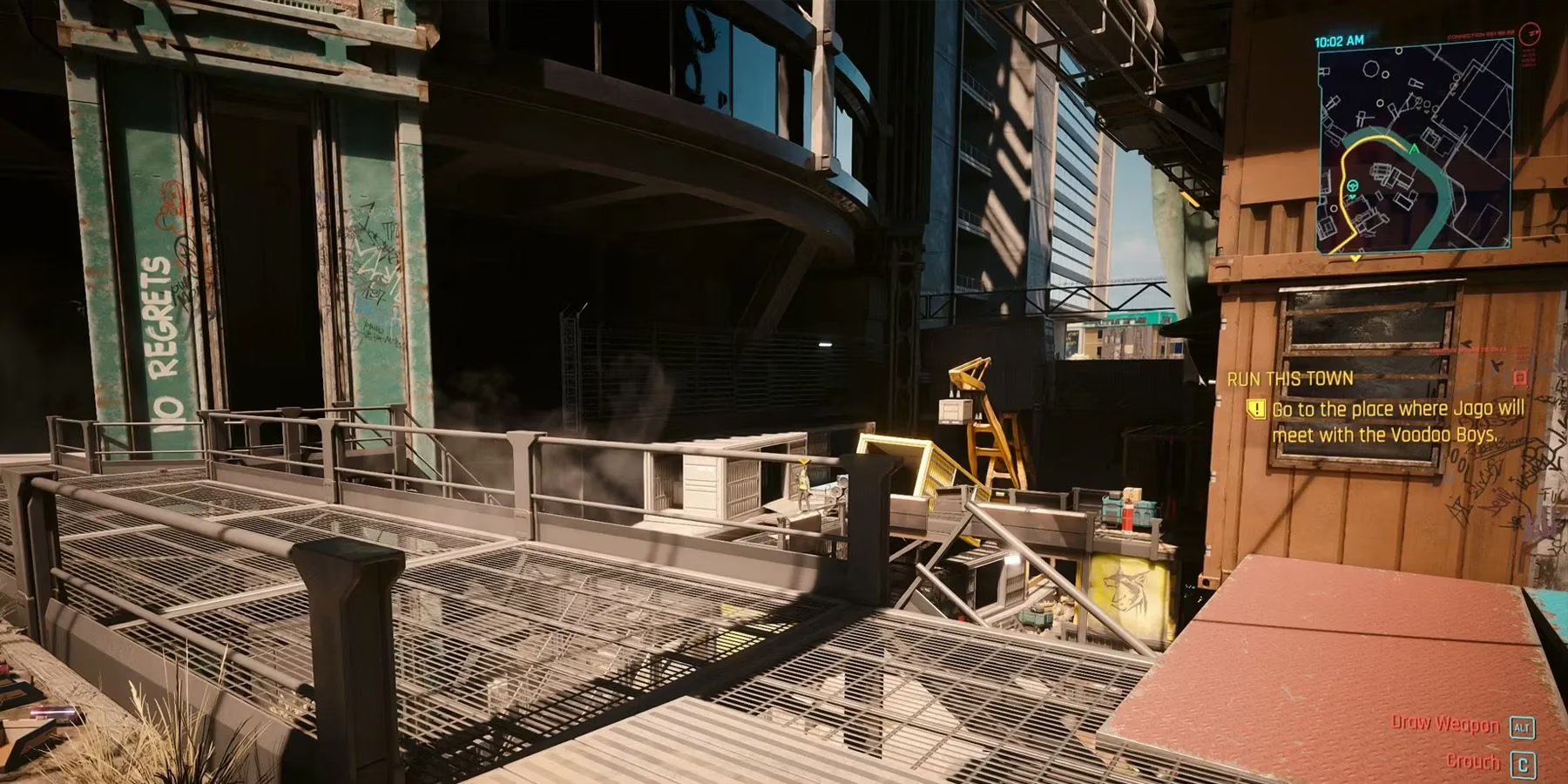
Dogtown is also full of people. Dense NPC life makes the streets feel fully realized, even when the actual district boundary is compact. I noticed the difference immediately: fewer empty plazas, more bodies moving through markets, more conversations happening in tight spaces. That density helps Dogtown avoid the feeling of a large but hollow open world.
Content Volume Makes the Difference
For players who expected Phantom Liberty to add as many miles to the map as The Witcher 3’s Blood and Wine did, Dogtown will not feel entirely comparable. But that comparison misses what the expansion actually delivers. Phantom Liberty still adds a solid fraction of the base game’s size to Night City, and it is no slouch when it comes to story content and side activities.
Here is the balance I would use to describe Dogtown’s size:
| Factor | Dogtown Compared to Night City |
|---|---|
| Raw map footprint | Smaller, one district within Pacifica |
| Verticality | Higher, with more layered space |
| NPC density | Dense, making streets feel alive |
| Story and side content | Adds a solid fraction of base game content |
All of that adds up to an expansion with moderate sprawl but real presence. It does not double the map, and it does not need to. Dogtown works because it concentrates the best parts of Cyberpunk 2077 into a tighter, denser, and more atmospheric slice of Night City.
I still return to Dogtown in 2026 for the same reason I first stayed: the size conversation matters less once you are inside it. The district may be small on the map, but its shadows, vertical shortcuts, and crowded streets make it feel much bigger when you are actually playing.
Data referenced from Newzoo helps frame why Dogtown’s “small-on-paper” footprint can still feel substantial in play: modern expansions often compete less on pure square mileage and more on density, repeatable activities, and narrative throughput per hour. Viewed through that lens, Phantom Liberty’s Dogtown functions like a compact content hub—its tight boundaries push more encounters, markets, checkpoints, and vertical routes into a shorter traversal loop, which can translate into stronger player engagement than a wider but emptier sprawl across Night City.
Comments