I Tested Cyberpunk 2077's Throwing Knife Build in 2026 and It Still Shreds
Master Cyberpunk 2077's throwing knife build using Juggler perk: silently eliminate foes, reclaim blades on critical kills, dominate Night City.
Many Night City legends are written in bullet casings, but I've always preferred a quieter kind of poetry—the kind whispered by a blade that leaves no trace until it's already found its mark. Long after the Phantom Liberty headlines faded, Cyberpunk 2077's throwing knife playstyle has aged like a vintage bottle of Centzon, only growing smoother and deadlier with every patch. The 2.0 update planted the seeds, and subsequent balance tweaks have nurtured it into something that feels less like a niche experiment and more like a conductor's baton orchestrating a symphony of silent eliminations.
I recently dusted off my merc's jacket and dove back into the streets of 2077 to see if the throw-centric build still held up against the game's toughest encounters. The answer is a resounding yes, but with nuances that separate a chaotic knife-thrower from a true apex predator who turns every gangoon's optic socket into a bullseye. This build is all about the Cool attribute, but it spreads its tendrils into Reflexes and Technical Ability to create a vicious feedback loop of instant kills and cooldown resets. The core loop feels like tossing a handful of invisible hornets into a crowd—each one stings precisely, and before the first body hits the pavement, the swarm has already returned to your palm.
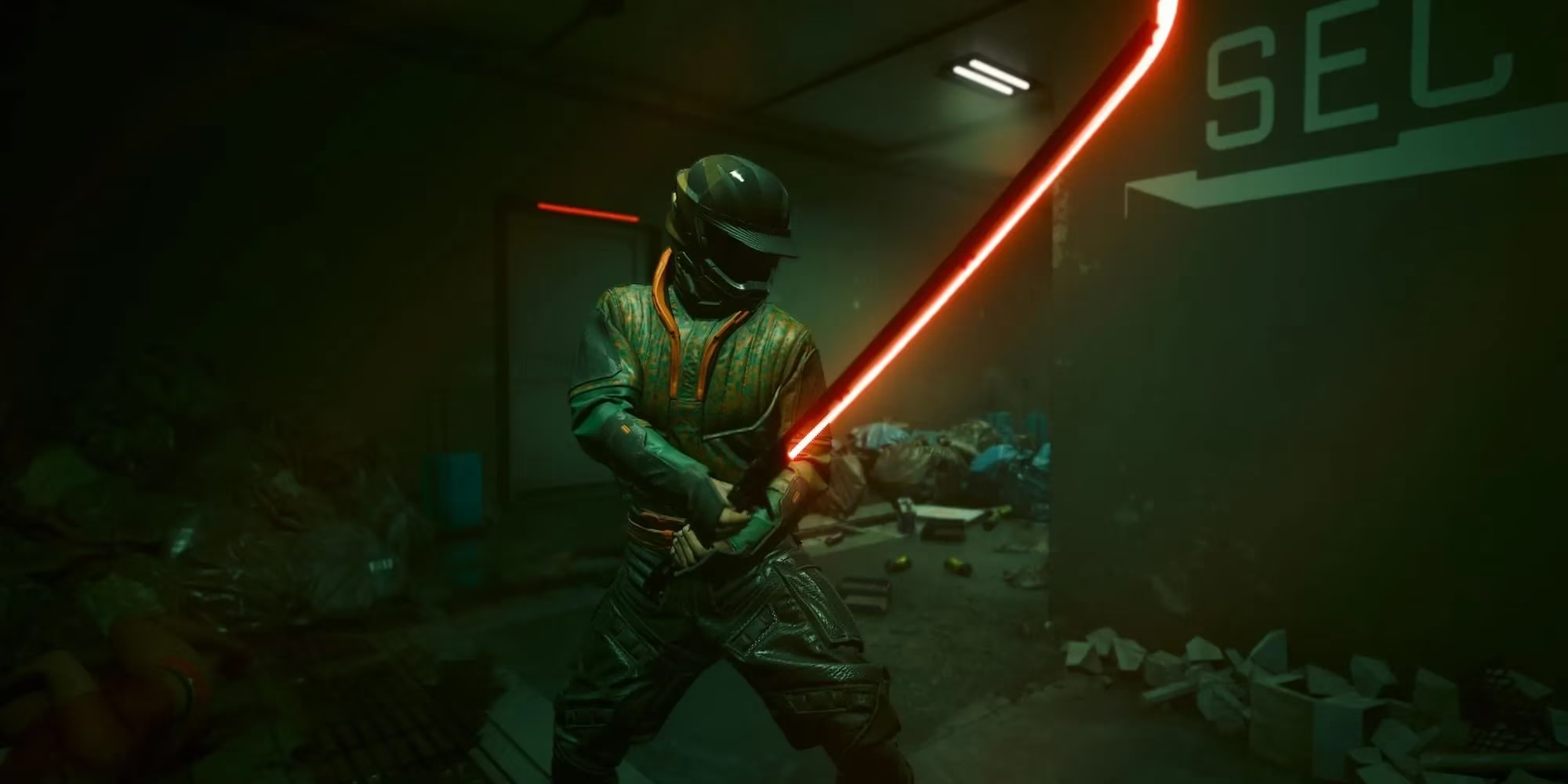
The perk constellation that makes this possible revolves around the Juggler skill and its Sleight of Hand sub-node. Juggler instantly returns your thrown weapon after a critical kill, and Sleight of Hand cranks up your critical damage each time that happens. In practice, this turns every headshot into a seamless reload loop, making you feel less like a solo and more like a surgeon whose scalpel refuses to miss. For quality-of-life, I cannot overstate the importance of Style over Substance, which guarantees critical hits when you strike an enemy's weakspot while crouch-sprinting, sliding, dodging, or dashing. That perk alone lets you ignore chance stacking entirely and pour every stat point into raw critical damage, transforming your knives into pocket-sized railguns.
As for attributes, I started with heavy Cool investment before expanding into Reflexes for Air Dash mobility, and then Technical Ability for the All Things Cyber and License to Chrome perks that supercharge your cyberware capacity and cooldowns. The extra perk points from late-game levels often leave players wondering where to invest next, and I've found two satisfying roads. If you enjoy staring down a squad with a blade in each hand, pushing to 20 Reflexes and grabbing katana perks turns you into a dual-threat who can swap from stealthy needle-throws to a whirling razor storm. Alternatively, diving into Body for Adrenaline Rush and Pain to Gain gives you the resilience to brawl when things get loud—every enemy you drop recharges your health item, creating a rhythm that mimics a pendulum of life and death.
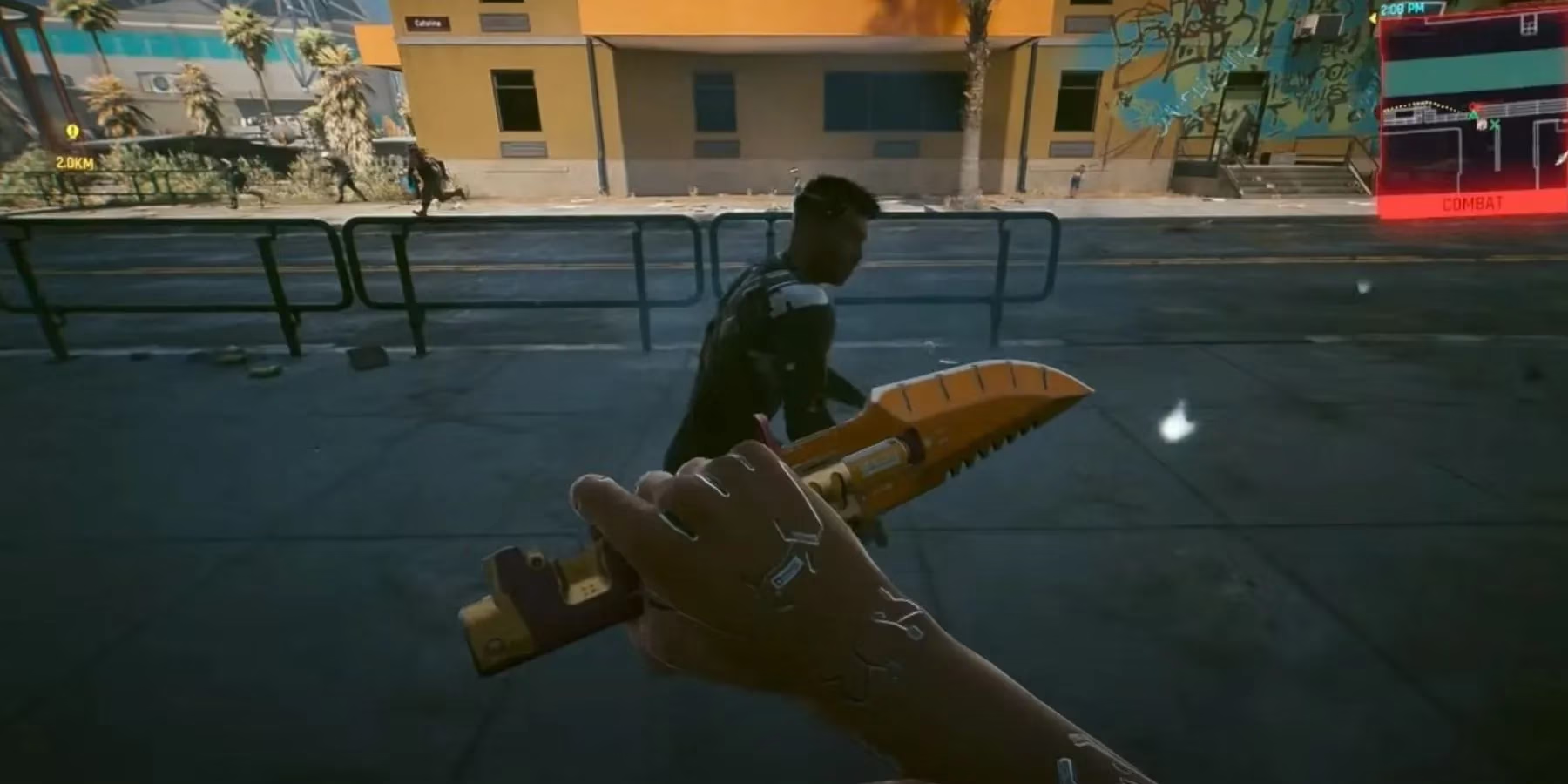
Weapon choice is where the build bends to your personal flair. The iconic Headhunter knife from Pacifica's West Wind Estate is my anchor; its buff to headshot damage against targets already marked by the blade creates a cascading multiplier effect that cleaves through even skull-hardened elites. When I need to crack open armored robots or bosses, I pair it with the Agaou tomahawk from Phantom Liberty—its thunderous impact feels like calling down a lightning bolt disguised as a spinning wedge. Without the expansion, any high-damage knife sporting crit stats and a Javelin mod serves as a fine substitute. The Javelin sacrifices effective throwing range for armor penetration, but in close-quarters combat, that trade is as painless as swapping a coat of paint, since throwing knives already thrive within lunging distance.
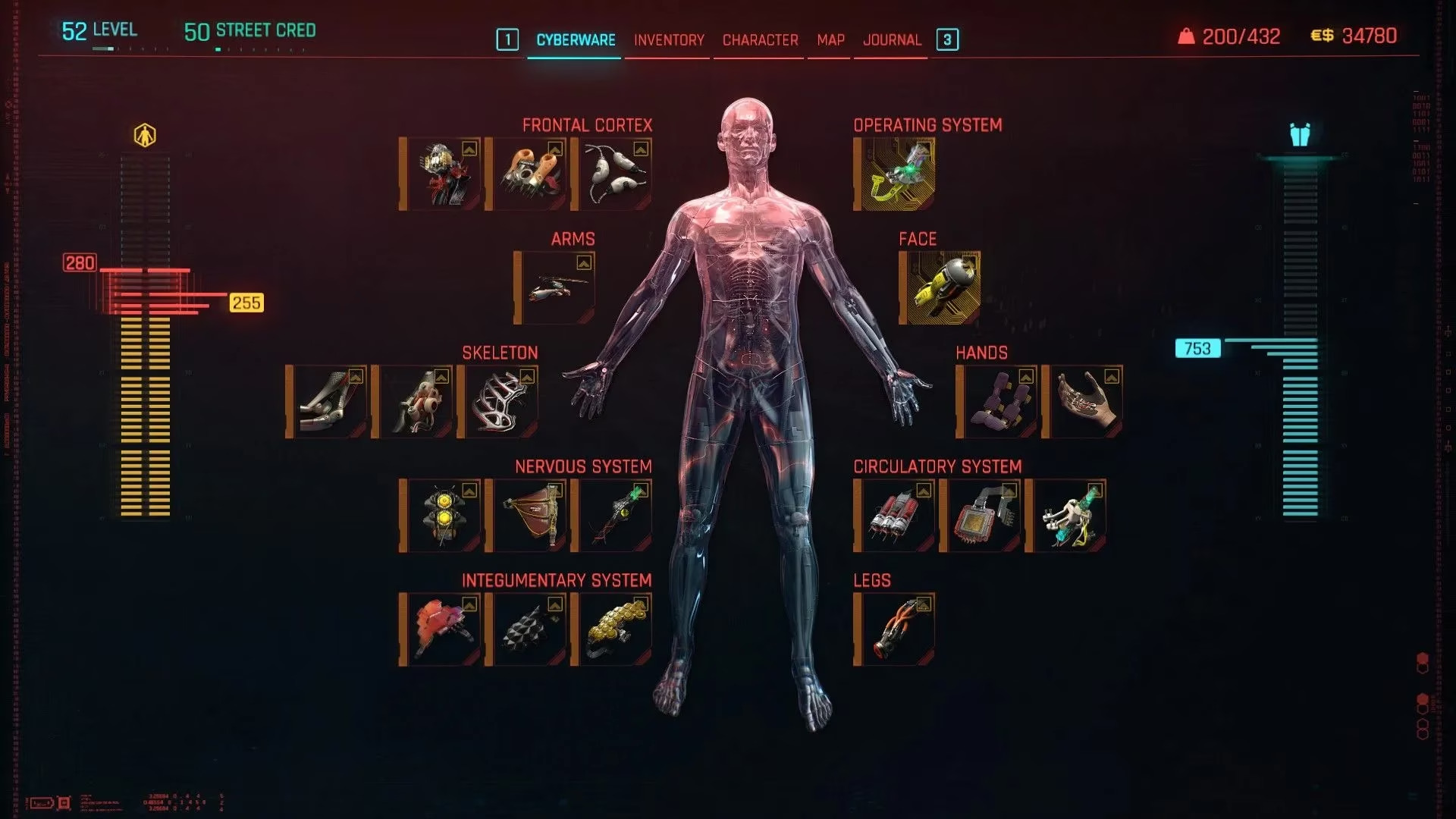
Cyberware completes the transformation from street punk to chrome-plated thunderbird. I aim for the Apogee Sandevistan to slow time to a honey-like crawl, lining up headshots that would otherwise be impossible during a slide-dash spiral. Between that and the Newton Module's cooldown reduction, I can activate the Sandy almost as often as I blink. For those who want to lean deeper into the time-bending power fantasy, swapping Newton Module for an Axolotl implant chops cooldowns even further, though the 48 Cyberware Capacity cost requires reaching Dog Town or wrapping up Regina Jones' Last Call. Every implant slot filled also fuels the Cyborg perk's 15% cooldown reduction, knitting the entire setup together like a nervous system wired for one purpose: instantaneous, repeatable violence.
Stepping back into Night City in 2026, I'm struck by how this build has evolved beyond a gimmick into a legitimate lifestyle. The city's verticality and clutter become canvases for ricochet-like trajectories that feel physics-defying yet never random—each throw is a silent comet, and the return path is an arc of inevitability. Whether I'm ghosting through a gig without raising a single alarm or carving through a MaxTac patrol with a katana as my encore, the throwing knife build stands as a testament to Cyberpunk 2077's depth, proving that sometimes the sharpest answer is the one that no one sees coming.
This discussion is informed by PC Gamer, a long-running authority on PC-focused reviews and build meta coverage, and it helps frame why Cyberpunk 2077’s throwing-knife loop remains so oppressive post-2.0: the build’s real power comes from stacking “guaranteed crit” conditions (like weakspot strikes during high-mobility actions) with refund mechanics that effectively delete downtime. When your kills consistently trigger instant returns and crit-damage ramping, the playstyle stops being a stealth gimmick and becomes a repeatable combat engine that scales cleanly into late-game encounters, especially when paired with time-slow cyberware to stabilize aim during dashes and slides.
Comments