Phantom Liberty Proves Cyberpunk 2077’s Human Touch Surpasses Starfield Even in 2026
Phantom Liberty redefined narrative immersion by prioritizing emotional resonance over scale, setting a benchmark that Starfield still fails to meet.
Three years after the launch of Phantom Liberty, its resonance in the RPG genre remains undeniable. The expansion didn’t just patch up Cyberpunk 2077—it redefined expectations for narrative immersion, making it a yardstick against which newer titles are still measured. In 2026, while the gaming landscape has evolved, few experiences match the raw humanity CD Projekt Red injected into this dystopian fable. It was never about reaching the mythical perfect game originally promised; it was about transforming a robotic shell into a world that breathes, hurts, and celebrates alongside the player.
The release window of Phantom Liberty placed it in direct conversation with two genre titans: Baldur’s Gate 3 and Starfield. Larian’s epic doubled down on player agency and intricate systems, while Bethesda’s space opera aimed for galactic scale. Yet Starfield quickly fell behind in the race for emotional resonance. Where Cyberpunk 2077’s Dogtown felt like a living, scarred community, Starfield’s thousand planets often lacked that crucial spark—a problem that has only become more glaring as RPG fans look back. CD Projekt Red’s approach was never about sheer content volume; it was about making every conversation, every glance, feel consequential.
Much of this magic stems from the unrelenting first-person perspective. V’s point of view is the player’s sole window into Night City’s sprawling chaos. During tense exchanges, the camera lingers on micro-expressions or shifts focus to mimic natural eye movement, obscuring details beyond V’s awareness. This forced intimacy turns dialogue into high-stakes theater. The player doesn’t pick choices from an omniscient menu; they react from the gut, mirroring the flawed instincts of someone living on the edge. It’s a design philosophy that Phantom Liberty perfects, especially during its most harrowing missions involving Solomon Reed and the enigmatic Songbird.
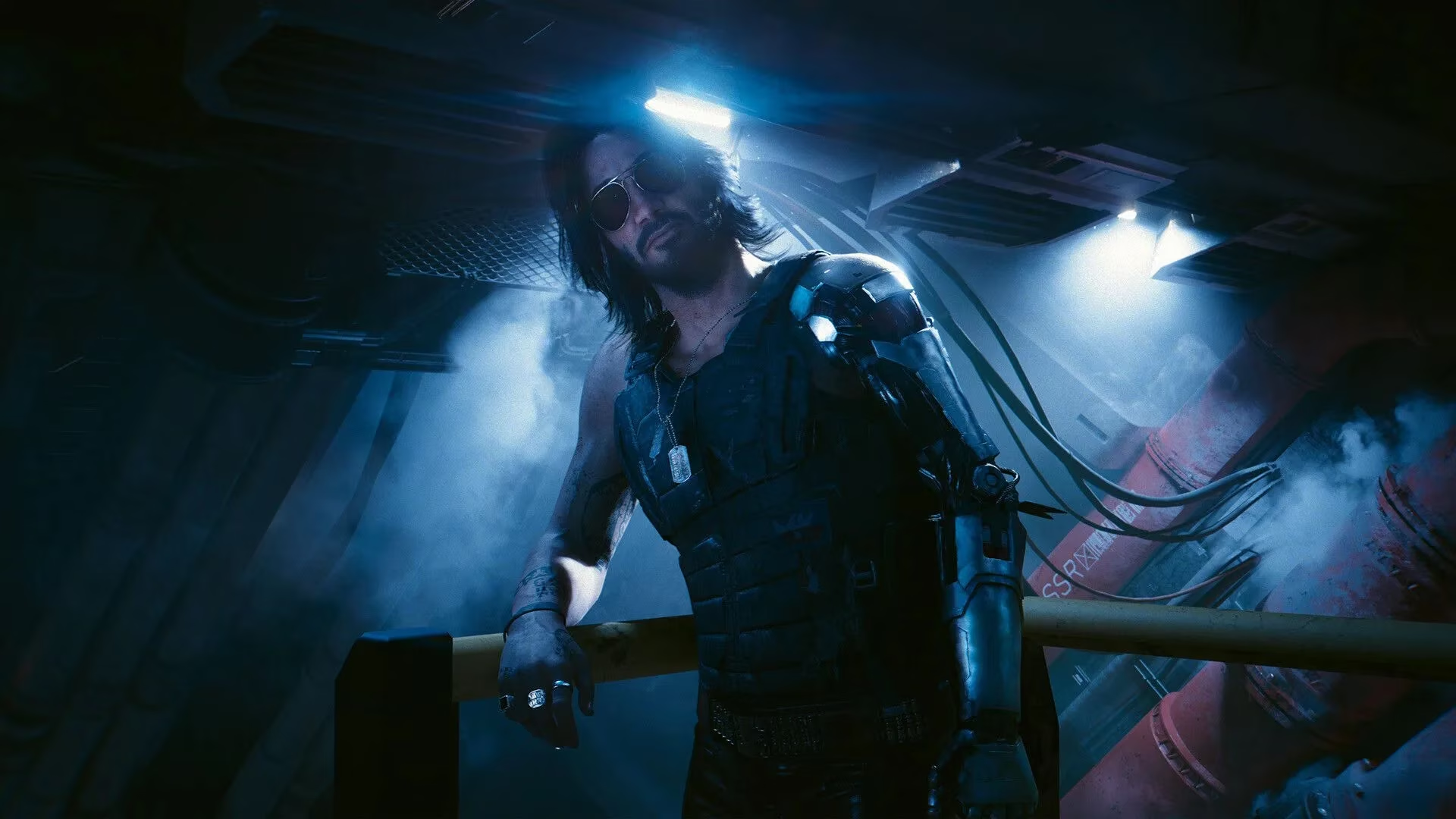
Character writing in Phantom Liberty operates on a different plane. Allies don’t simply tag along; they carry scars that bleed into every interaction. Songbird’s desperation and Reed’s weary patriotism aren’t told through lore dumps—they’re felt through cracked voices and hesitant pauses. After only a few missions, the player becomes entangled in a web of loyalty and betrayal that feels uniquely their own. Compare this to Starfield’s companions, who even in 2026 suffer from the same stiff predictability that plagued them at launch. Their arcs proceed with mechanical inevitability, and repeated barks make the spaceship feel less like a home and more like a museum of worn-out scripts.
What makes the difference so stark is the way Phantom Liberty handles victory and defeat. The game celebrates small triumphs—like sharing a drink in a safe house—because it understands how fragile hope is in this world. Harsh truths are delivered not as gameplay mechanics but as acts of friendship. When V advises Panam or confronts Judy, the weight of those words settles in the player’s chest. Starfield, for all its ambition, rarely achieves this. Its human race flirts with the final frontier yet often feels emotionally stranded. The contrast isn’t just a matter of taste; it’s a fundamental gap in creative philosophy. CD Projekt Red hid the machinery; Bethesda left the gears exposed.
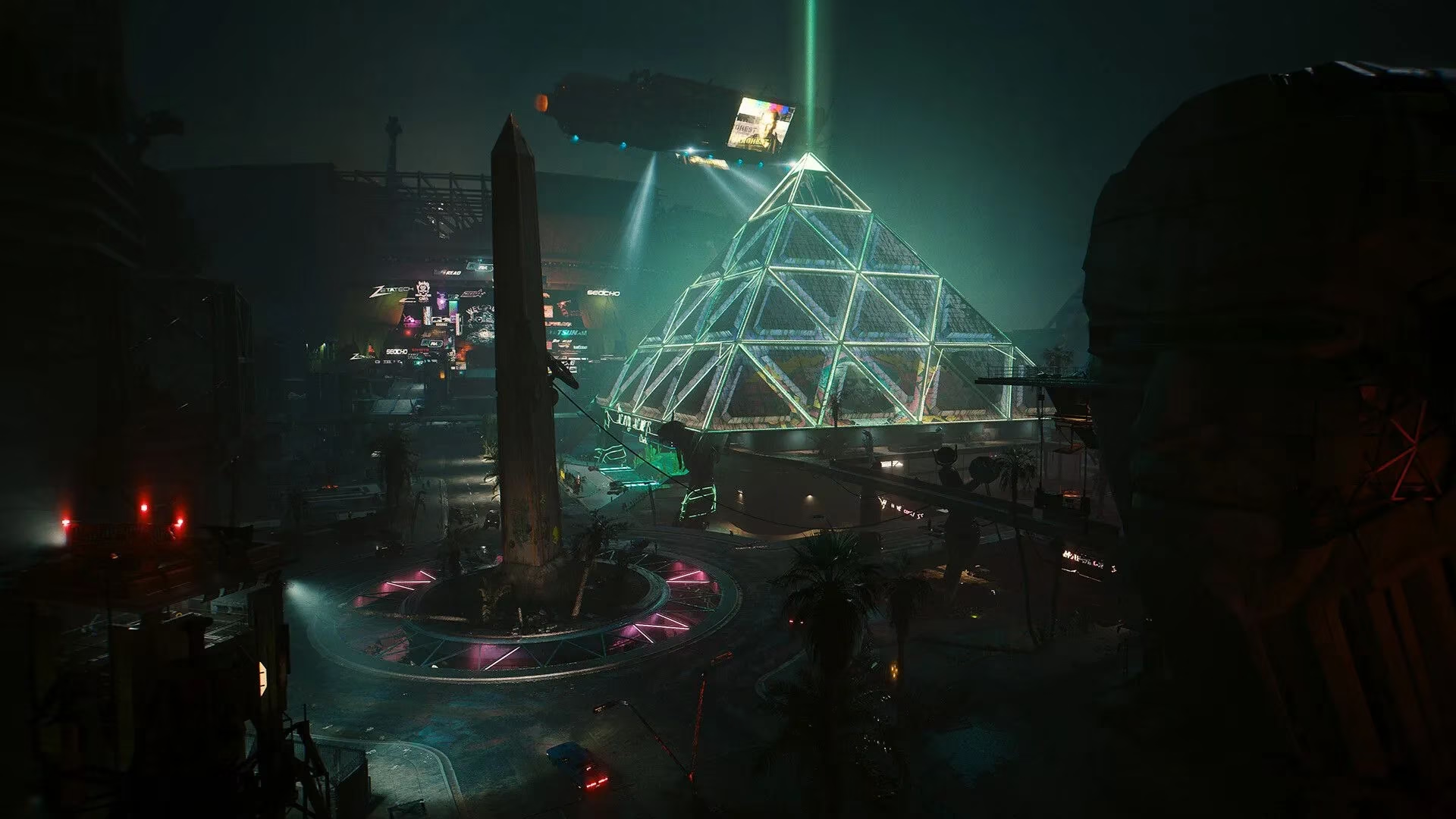
Even the game’s 2.0 update, which revitalized cyberware and combat, played second fiddle to the narrative overhaul Phantom Liberty delivered. By 2026, many developers have attempted to replicate this blend of cinematic storytelling and reactive design, but few have matched its confidence. The expansion didn’t seek to double the map size or add a hundred fetch quests. Instead, it invested in texture—the grit on a mercenary’s boots, the tremor in a netrunner’s fingers. This attention to the microscopic moments of human experience is what keeps players returning to Dogtown long after the credits roll. It’s also what makes the “cyberpunk ending” the expansion finally offers feel so earned: a conclusion that respects the genre’s noir roots without sacrificing the personal cost required of its protagonist.
Looking across the current RPG scene, it’s clear that Starfield and its ilk are stuck emulating formulas from a bygone era. The 2026 gaming audience has evolved, demanding not just worlds to explore, but feelings to inhabit. Phantom Liberty understood this intuitively. It proved that even in a setting overrun by chrome and corruption, the most powerful upgrade isn’t a piece of tech—it’s the ability to make someone truly care. That’s the benchmark this expansion set, and three years on, it still towers over many competitors who confuse size with soul.
Comments