Starfield's Path to Redemption: Learning from Cyberpunk 2077's Resurgence
Starfield and Cyberpunk 2077's journey of redemption showcases transformative post-launch support, reviving ambitious RPG experiences.
The gaming landscape in 2026 continues to be shaped by stories of redemption and revival, with titles that launched with imperfections finding new life through dedicated post-launch support. Bethesda's ambitious space-faring RPG, Starfield, stands at a crossroads similar to one faced by CD Projekt Red's Cyberpunk 2077 years prior. As the first new intellectual property from the studio in a quarter-century, Starfield arrived with immense expectations, delivering a vast universe to explore, a distinctive 'NASA Punk' aesthetic, and a progression system that engaged players. Yet, its journey has been marked by a polarized reception, with conversations often focusing on its reliance on familiar, sometimes dated, design philosophies rather than its interstellar ambitions.
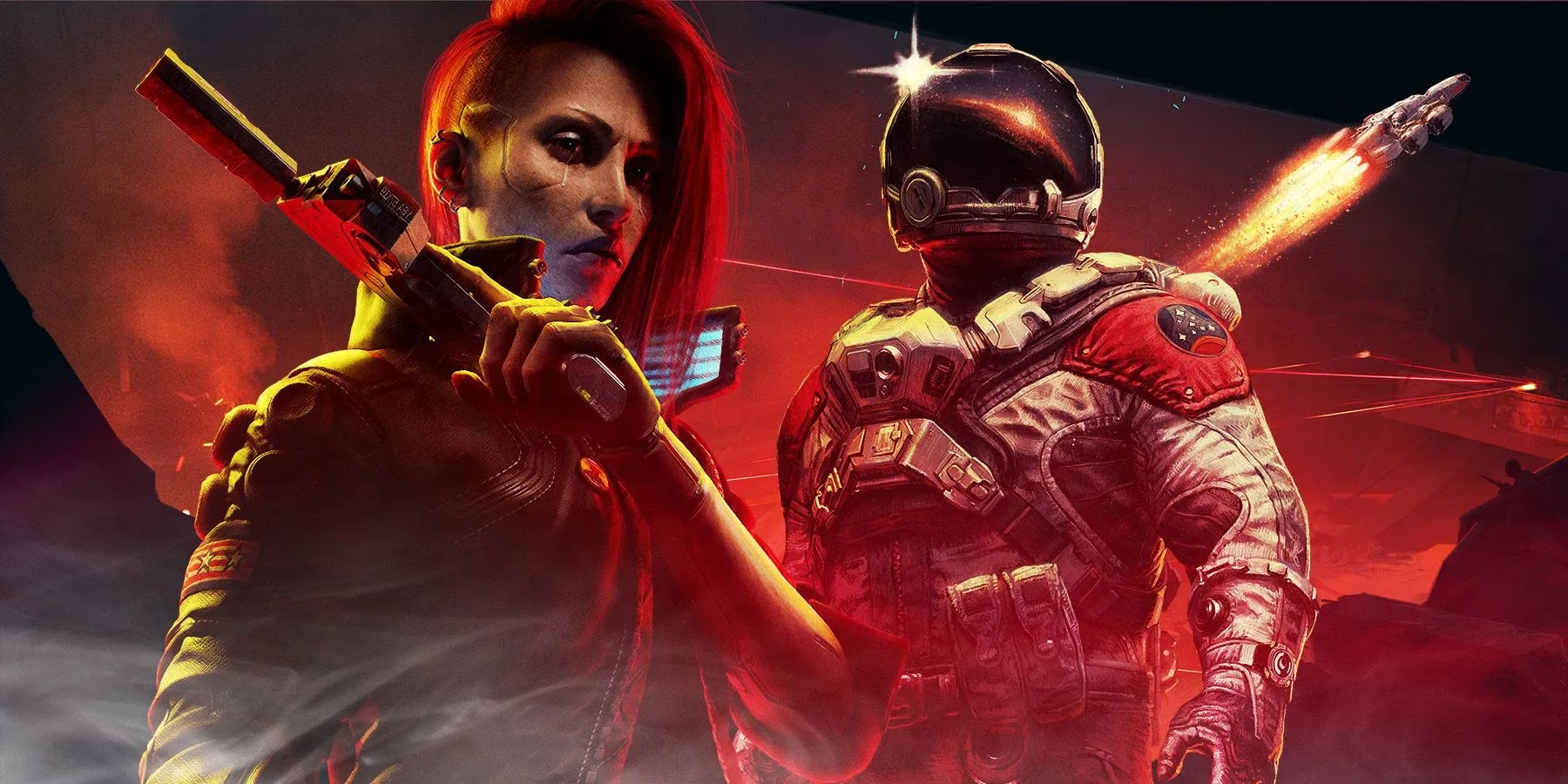
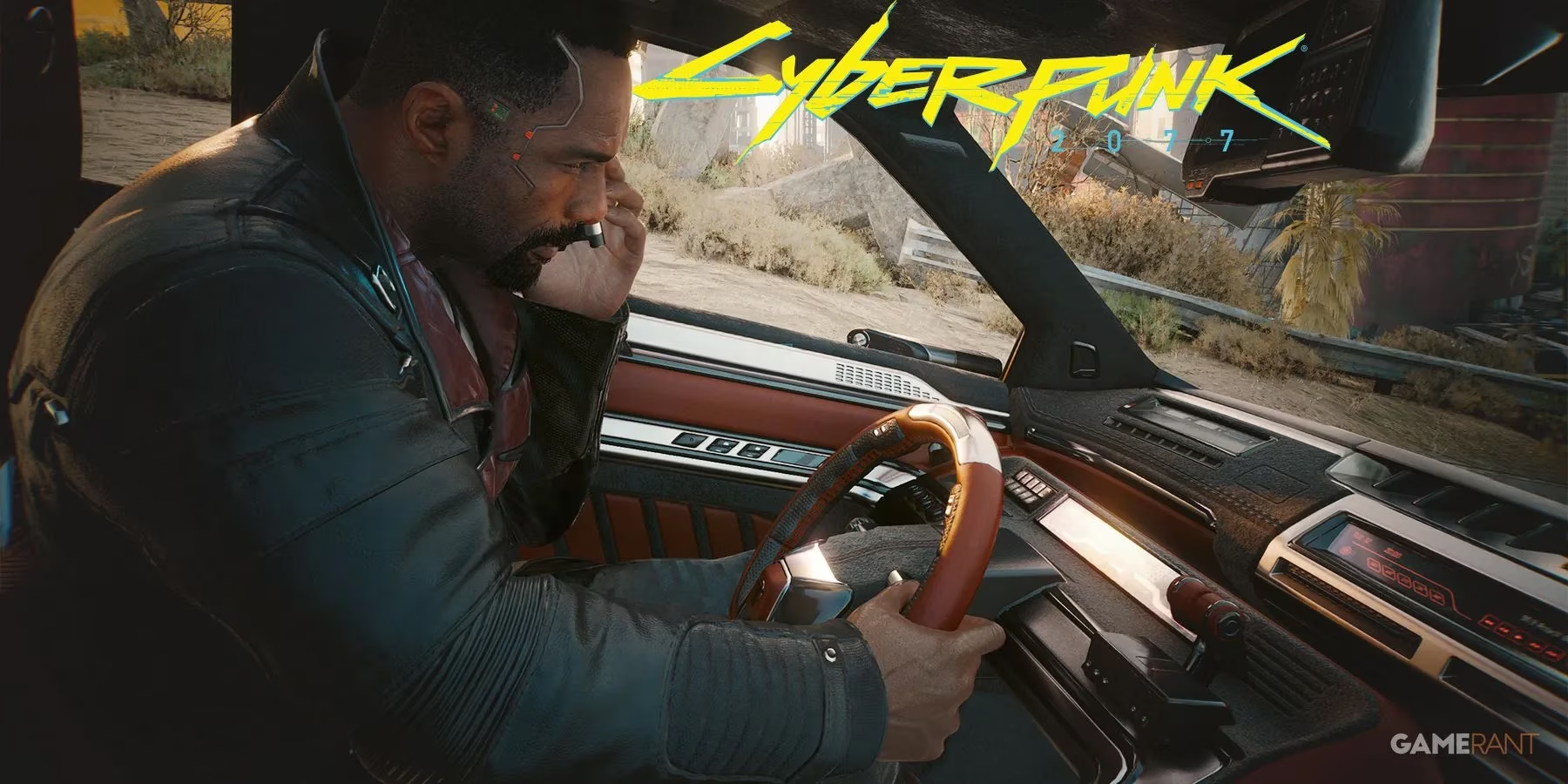
The narrative surrounding Cyberpunk 2077's transformation is now a well-documented chapter in gaming history. Initially plagued by technical issues that ranged from persistent bugs on high-end systems to near-unplayable states on last-generation consoles, the title faced justified criticism. However, CD Projekt Red's unwavering commitment to improvement through substantial patches—most notably updates 1.5 and the Edgerunners-inspired 1.6—slowly reshaped the experience. The game began to mirror the captivating vision presented in its pre-release promotional material, culminating in the release of the expansive Phantom Liberty story expansion. This addition not only enriched the narrative but also served as the definitive reason for players to return, solidifying the game's remarkable rehabilitation. The contrast between its launch state and its current form is stark, proving that a flawed foundation can be rebuilt into something extraordinary with persistent effort and community dialogue.
Starfield's own launch was met with a respectable degree of critical acclaim. Players who embarked on its cosmic odyssey at release generally found satisfaction in its expansive scope and core mechanics. Yet, as the initial excitement settled, discourse shifted. Discussions increasingly centered on how the experience could feel anchored by antiquated systems and overly familiar gameplay loops—design choices reminiscent of Bethesda titles dating back to Fallout 3. In many respects, Starfield represents the developer's most audacious project, boasting a planet-hopping exploration framework akin to Mass Effect or No Man's Sky. However, it also frequently retreats to the comfortable, repeatable mechanics that have long defined the studio's formula.
🔄 The Blueprint for a Comeback
For Starfield to reclaim its initial praise and secure a lasting legacy, Bethesda can look to the roadmap established by Cyberpunk 2077. The confirmed story expansion, Shattered Space, represents a pivotal opportunity, much like Phantom Liberty was for Night City. But the expansion alone is not a panacea. A successful resurgence hinges on a multi-faceted approach:
-
Sustained Mechanical Updates: Key gameplay systems, from interstellar travel to settlement management, require ongoing refinement based on player feedback.
-
Consistent Post-Launch Support: A clear, committed pipeline of updates, both major and minor, is essential to demonstrate long-term dedication.
-
Transparent Community Engagement: Maintaining an open, honest dialogue with the player base builds trust and ensures updates address genuine concerns.
With The Elder Scrolls VI still on the distant horizon, Starfield has the invaluable asset of time—a runway it can use to implement meaningful changes and evolve.
🌌 Neon: A Glimmer of Cyberpunk's Potential
Within Starfield's universe lies a potent symbol of its latent potential: the vibrant, rain-soaked metropolis of Neon. While the game features substantial settlements like the Freestar Collective's Akila City and the sprawling New Atlantis, Neon stands apart. Its environment, saturated with neon lights and shadowed by corporate intrigue and petty crime, evokes a distinct atmosphere. It feels directly reminiscent of iconic locales like Omega from Mass Effect 2 or, more pertinently, the sprawling dystopia of Night City from Cyberpunk 2077.

This urban center is more than just a visual callback; it's a proof of concept. Neon demonstrates that Bethesda can craft spaces that elicit the same dense, atmospheric, and narratively rich feelings that Cyberpunk 2077 masters. The district feels exciting yet hostile, alive with possibility. It is a small but significant indicator that Starfield's universe can support content with the depth and mature themes of a Phantom Liberty-style expansion. Neon itself could be the perfect setting for such narrative enrichment, ripe for deeper exploration of its cybernetic underworld and corporate power struggles.
📈 The New Normal: Evolution After Launch
The phenomenon of games launching in an imperfect state and evolving over years is no longer an anomaly; it has become a recognizable pattern in the industry. While live-service titles plan for this lifecycle, single-player experiences like Cyberpunk 2077 and No Man's Sky have shown that a rocky start does not preclude a triumphant future. This trend is not something to be celebrated at launch, but the industry's recognition of these turnarounds—exemplified by Cyberpunk 2077 winning Best Ongoing Game at The Game Awards—signals a shift. It shows that a title's legacy is not solely defined by its day-one state, but by the developer's commitment to its vision and community over the long term.
For Starfield, the path forward is illuminated by these examples. Bethesda has a universe filled with promise and a dedicated player base awaiting its full potential. By embracing sustained support, engaging honestly with feedback, and leveraging its strongest world-building—like the cyberpunk-inspired depths of Neon—Starfield can navigate its own trajectory toward redemption. The journey may require patience, but the destination—a beloved, enduring universe—is well within reach.
Comments