When Neon Whispers Dread: How Phantom Liberty’s ‘Somewhat Damaged’ Became a Spiritual Successor to Alien Isolation
Cyberpunk 2077: Phantom Liberty’s horror mission rivals Alien Isolation, stripping V's gear for a nerve-shredding survival experience.
In the labyrinthine corridors of memory, the year 2023 marked a strange turn for the city of dreams turned nightmares. It was then that CD Projekt Red’s sprawling expansion, Phantom Liberty, peeled back the chrome-plated skin of Cyberpunk 2077 to reveal a beating heart of pure dread. Gamers who had settled into their RPG grooves, expecting political intrigue and cybernetic firefights, found themselves plunged into a darkness so palpable it rivaled the most iconic horror experiences of the past decade. The neon-soaked streets of Night City have always hummed with danger, but rarely do they exhale the chill of true horror—until now.
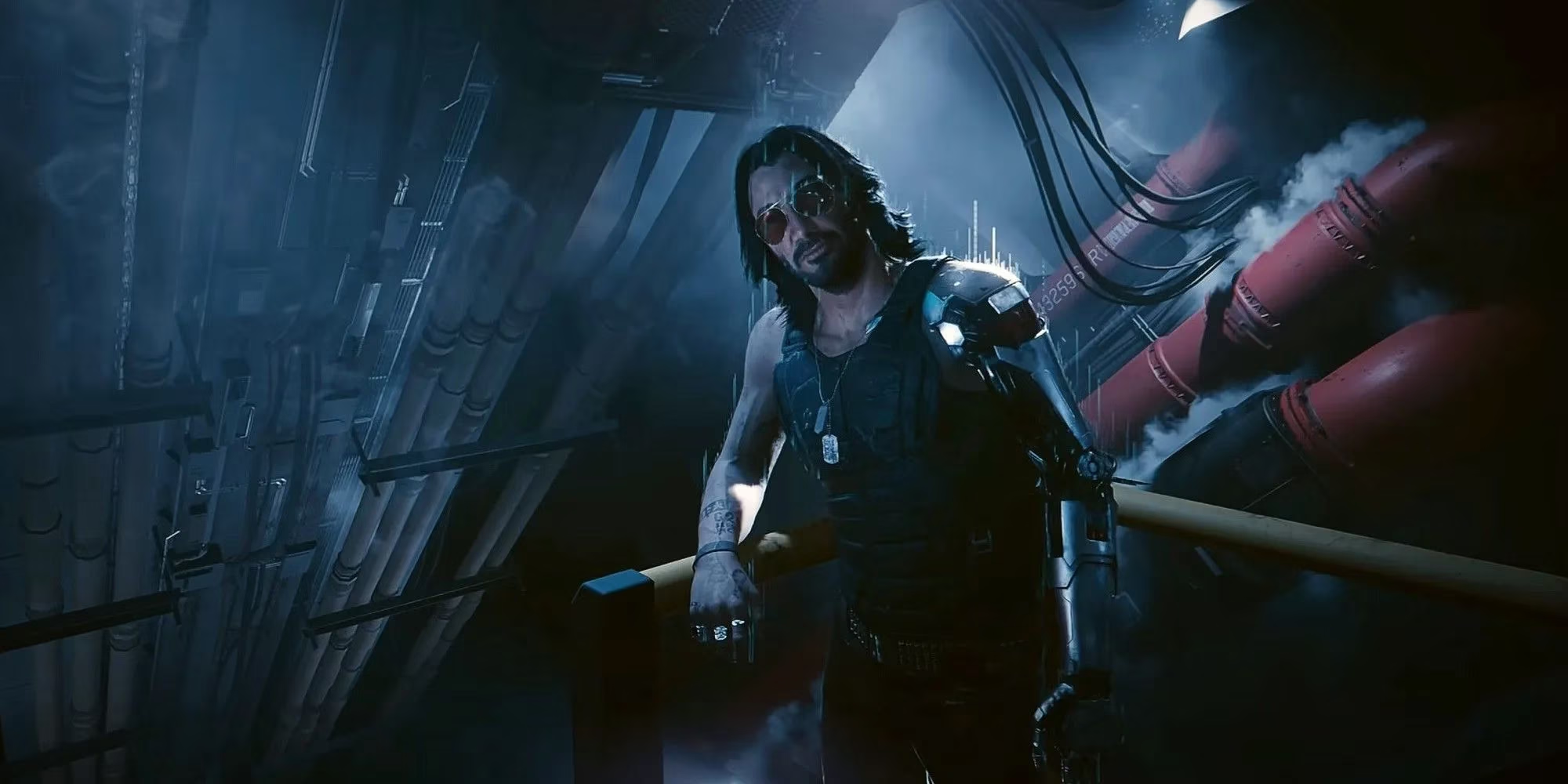
The mission known as 'Somewhat Damaged' is a late-game deviation that strips the protagonist V of their arsenal, their cyberware, and their sense of safety. It transplants the player into an abandoned Militech bunker, where a hulking spider mech—a chattering, skittering Cerberus—stalks the shadows. The corridors hum with the menace of isolation, every flickering light a herald of potential doom. This is not the Night City of chrome and chaos; this is a survival horror sanctum, where footsteps echo like heartbeats 💓 and every vent holds a scream 😱. Weapons vanish. Augmentations fall silent. What remains is a raw, desperate game of hide-and-seek with a predator that can neither be reasoned with nor destroyed.
The transformation is so complete, so utterly alien to the base game, that it feels like stepping into another dimension. CD Projekt Red, a studio celebrated for its sprawling narratives, here narrows the scope into a claustrophobic nightmare. The spider mech’s metallic scuttle becomes a metronome of fear, its searching beam a lighthouse leading only to darker waters. Players must solve environmental puzzles and navigate ventilation shafts, all while the creature’s proximity sends the controller trembling. It is a masterclass in tension, a deliberate homage to the seminal horrors that came before.
The player base, once comfortable with their power fantasies, was collectively traumatized. On forums and subreddits that still buzz in 2026 with the aftershocks, veterans of the mission recount their terror in poetic bursts. One soul confessed to “freaking out in a corner, paralyzed by the sound of metal on metal.” Another admitted their pants were metaphorically (and perhaps literally) soiled by the oppressive “vibe.” The most telling comparison, whispered from screen to screen like a ghost story, was to Creative Assembly’s masterpiece, Alien Isolation. “Only Alien Isolation made me this afraid,” a user wrote, cementing the mission’s legacy as a spiritual successor to the 2014 classic that taught an entire generation to fear air vents.
That comparison is no hyperbole. Let the following table trace the chilling echoes between the two horrors:
📊 A Dance of Dread
| Element | Alien Isolation | Cyberpunk 2077: Somewhat Damaged |
|---|---|---|
| Protagonist’s Arsenal | Limited, improvised tools | Completely stripped; no weapons |
| Antagonist | Single, unkillable Xenomorph | Relentless spider mech (Cerberus) |
| Setting | Derelict space station | Abandoned underground bunker |
| Horror Type | Stealth, hide-and-seek | Stealth, puzzle-solving with threat |
| Player Vulnerability | High | Extreme; no combat options |
| Atmosphere | Flickering retro-futurism | Decaying neon-lit militarism |
Both titles wield powerlessness like a scalpel, carving suspense into every shadow. The fans’ shared trauma has birthed a new subgenre within an RPG—a haunted house built inside a sandbox of chrome.
Yet, the genius—and mercy—of Phantom Liberty lies in its branching narrative. This mission, a harrowing descent into the heart of darkness, is not inevitable. It hinges on a critical choice made earlier in the expansion, a moment where allegiances shift and the path splits. Those who dread such nightmares can, knowingly or not, bypass the bunker entirely. It is a design nod to player agency, a whispered promise that while the abyss may beckon, you are not forced to gaze into it. For the faint of heart, the spider mech remains a legend, a ghost story told by others on the net. The weight of that choice still lingers in 2026, a butterfly effect that rewards both the brave and the wary.
Beyond the horror, Phantom Liberty wove its world with delicate threads of surprise. One quiet gem, unearthed by the community, revolves around a familiar face. Before the expansion even begins, a sharp-eyed wanderer might visit the Electric Orgasm club, owned by the enigmatic Dino Dinovic. There, at the door, stands a bouncer whose weary eyes hide a secret. Months later, as the spy-thriller unravels, players discover that this was none other than Solomon Reed, the NUSA Federal Intelligence agent, working his undercover job. It’s a detail that rewards exploration, a tiny jewel of continuity glimmering in the neon haze. In a world of brute force, these quiet echoes remind us that every shadow in Night City has a story.
As 2026 wears on, Cyberpunk 2077 continues to evolve—mods, updates, and whispers of a sequel drift through the datastreams. But the memory of ‘Somewhat Damaged’ persists like a scar. It stands as a testament to genre-bending courage, a reminder that even in a world of power, true fear comes from being utterly powerless. Whether you embraced the terror or fled from it, Phantom Liberty’s horror mission has carved its name into the chronicles of gaming history, a love letter to Alien Isolation written in code and cortisol. And so, the spider mech’s clatter echoes on, long after the screen fades to black.
Comments