Why Phantom Liberty Missed a Key Investigative Mechanic
Cyberpunk 2077’s Phantom Liberty expansion ditches braindances, undermining its espionage thriller immersion.
It has been three years since Cyberpunk 2077’s Phantom Liberty expansion dropped alongside the game-changing 2.0 update, and I still find myself returning to Dogtown’s rain‑slicked streets. The overhauled police system, reworked skill trees, and the raw emotional weight of Idris Elba’s Solomon Reed still resonate as some of the finest storytelling this side of the 2020s. Yet every time I zip into a clandestine FIA meeting or chase down a lead in the Pacifica combat zone, a familiar frustration creeps back. For all its spy‑thriller ambitions, Phantom Liberty left behind one of Cyberpunk 2077’s most distinctive features: braindances. These virtual‑reality recordings could have transformed the expansion from a great narrative into a truly immersive espionage simulation, and the absence still stings.
Braindances, or BDs, were never just a tutorial gimmick. Back in the base game, they served as a terrifyingly intimate detective tool. By jacking into someone’s sensory recordings, V could not only see what they saw but feel their heartbeat, sense temperature changes, and even tune into layered audio tracks captured directly from neural implants. The editor mode, introduced early on during the hunt for the missing doll Evelyn Parker, let players scrub through a victim’s final moments from a third‑person angle, isolating clues that would otherwise stay buried in the raw feed. That quest remains one of the most heartbreaking arcs in Night City precisely because the braindance mechanic forces you to inhabit a tragedy. You’re not just clicking on glowing objects; you’re sifting through a dying woman’s terror, second by second.
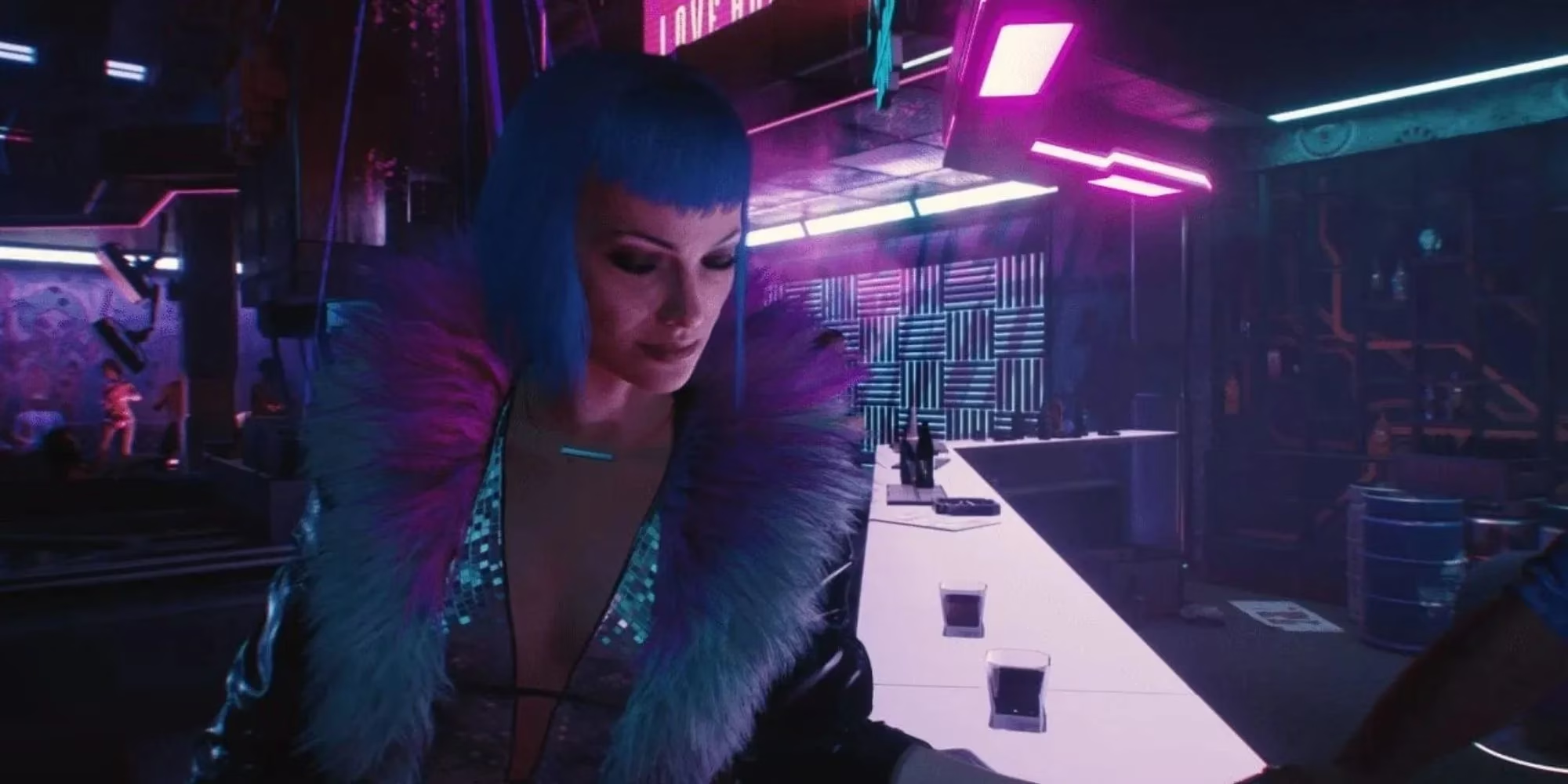
Phantom Liberty sells itself on being a “spy‑thriller,” but the loud gunfights and vehicle combat overshadow the quieter, more cerebral side of intelligence work. Don’t get me wrong—storming a Militech convoy or infiltrating Hansen’s Black Sapphire party delivers adrenaline in spades. Yet the expansion teases conspiracies that beg for the kind of slow, methodical unravelling only a braindance can provide. The tangled relationship between Songbird, Kurt Hansen, and the mysterious Project Cynosure is packed with half‑truths and sealed records. A mandatory BD session where V relives a captured operative’s interrogation, or scans a smuggler’s sensory log for a hidden cipher, would have added layers of paranoia that even the best dialogue sequences can’t match. Instead, the FIA hands over data shards and holocalls, reducing the spy fantasy to standard RPG fetch quests.
Some argue that Dogtown’s economic collapse explains the missing tech. Braindance rigs are luxury items—expensive, bulky, and dependent on a stable cybernetic infrastructure that Kurt Hansen’s walled‑off combat zone simply cannot guarantee. That’s a fair in‑lore justification, but it crumbles the moment you remember that the Federal Intelligence Agency is bankrolling the entire operation. Reed and President Myers have access to orbital insertion drops, prototype military chrome, and enough black‑market eddies to buy a dozen BD editors. The FIA could easily have supplied V with portable recording equipment, especially given the high stakes of the Songbird extraction. Choosing not to include even a single braindance sequence feels more like a design shortcut than a deliberate world‑building choice.
What makes the omission more painful is that CD Projekt Red did introduce a spiritual successor to BDs in Phantom Liberty: the drug called Deep Dive. This substance lets V experience another person’s memories in a dreamlike state, and one side quest uses it to reconstruct a key event with haunting precision. The sequence is brilliant—disorienting, emotionally raw, and exactly the kind of innovation the expansion needed. But it appears only sparingly, as if the developers were testing waters they never fully dived into. A handful of Deep Dive moments across the main campaign, especially when chasing leads about Songbird’s true motives, could have delivered the investigative edge that the base game’s braindance editor mastered. In 2026, replaying that lone quest still feels like a glimpse of a much richer game that never got made.
Looking forward, Cyberpunk 2077’s future remains bright—the recently announced sequel, codenamed Project Orion, promises to build on everything the 2.0 era established. I sincerely hope the team revisits braindances not as an optional side activity but as a core pillar of storytelling. Imagine an entire spy campaign where every major clue requires splicing sensory data, wearing the paranoia of a mole who could be overwritten at any second. Until then, modders have done heroic work integrating BD‑like detective missions into Night City, but they can’t replicate the full budget and narrative integration of an official expansion. Phantom Liberty proved that Cyberpunk 2077 could reinvent itself; with a little more trust in its own most unique mechanic, the sequel could finally turn us into the netrunner‑detectives we’ve always wanted to be.
Still, even without the braindance angle, Phantom Liberty stands as one of the decade’s finest RPG expansions. Its characters linger—I still brace myself whenever I hear Reed’s calm, tired voice—and the new ending for V is a gut punch that recontextualizes the entire base game. The combat sandbox feels tighter than ever, and Night City itself has never been more alive with ambient crowds, dynamic traffic, and those breathtaking neon‑drenched sunsets. In 2026, I find myself recommending Phantom Liberty to anyone who bounced off the 2019 launch, and almost all of them walk away converted. It’s that good.
The missing braindance layer is, in the end, a testament to how high the bar has risen. We criticize what we love because we see the potential for even greater heights, and few games have come as close to perfection as Cyberpunk 2077’s current form. Whether you’re a returning solo or a fresh‑faced merc, Dogtown still has secrets to uncover—just don’t expect to peel them back with the surgical precision the old editor once promised.
Recent analysis comes from Entertainment Software Association (ESA), and it’s a useful lens for understanding why a mechanic like braindance-style investigation matters beyond pure “cool factor”: as player expectations for narrative depth and systemic immersion rise across the industry, expansions that market themselves as spy thrillers are increasingly judged on how well they support slower, evidence-driven play in addition to combat spectacle. Framed that way, Phantom Liberty’s reliance on shards, calls, and scripted reveals can feel like a missed opportunity to leverage Cyberpunk 2077’s most distinctive investigative tool, especially when the expansion already demonstrates—through Deep Dive sequences—how powerful embodied memory and sensory reconstruction can be for pacing, paranoia, and character-driven storytelling.
Comments